

All-inclusive is the most misunderstood board basis in travel. It is sold as simplicity, priced as a premium, and judged almost entirely on the headline number. This guide explains how the pricing actually works, what sits outside the wristband, and how to tell whether all-inclusive is the right choice for your holiday before you pay a deposit.
To get the best all-inclusive deal, work out your daily drinks and meals spend first, then compare it against the board-basis upgrade cost. Book 9–11 months ahead for peak school holidays and 6–10 weeks ahead for off-peak flexibility. Check what sits outside the wristband before comparing any two prices.
- All-inclusive beats half board when a couple spends more than roughly £40–£50 a day on drinks, snacks and lunches.
- Peak-season prices rise as departure approaches. Off-peak prices can fall. The two need opposite booking strategies.
- Premium spirits, à la carte restaurants, motorised watersports, spa and local tourist taxes usually sit outside the package.
- A low deposit is a cash-flow benefit, not a discount. The balance date is the number that matters.
- Only a flight-inclusive package sold by a UK company carries ATOL protection. Assembling it yourself does not.
What does all-inclusive actually mean?
All-inclusive is a board basis, not a standard. There is no legal definition and no industry-wide specification. Two resorts in the same town can both advertise all-inclusive and deliver very different things.
At minimum it normally covers breakfast, lunch and dinner in the main buffet restaurant, plus local-brand alcoholic and soft drinks during set hours. Everything above that varies by property.
The board basis ladder
| Board basis | What it covers | Suits |
|---|---|---|
| Room only | Accommodation alone | City breaks, eating out every night |
| Bed and breakfast | Room plus breakfast | Exploring destinations with good local food |
| Half board | Breakfast and dinner, drinks extra | Light drinkers, day-trippers, lunch out |
| Full board | All three meals, drinks extra | Remote resorts with few alternatives |
| All-inclusive | Meals plus local-brand drinks and snacks | Resort-based holidays, families, fixed budgets |
| Premium or ultra all-inclusive | Branded spirits, à la carte dining, minibar, some activities | Five-star resorts, long-haul, honeymoons |
The gap between standard and premium all-inclusive is where most disappointment happens. A four-star all-inclusive in Turkey and a premium all-inclusive in the Caribbean share a label and almost nothing else.
Is all-inclusive cheaper than half board? Do the arithmetic
This is the calculation nearly every guide tells you to do and then doesn’t show you. Here it is.
Take the price difference between half board and all-inclusive, divide it by the number of nights, then divide by the number of people. That gives you the daily cost per person of the upgrade. Then estimate what you would actually spend on drinks, lunches and snacks without it.
A couple books seven nights. All-inclusive costs £280 more than half board for the two of them.
£280 ÷ 7 nights = £40 a day for the couple, or £20 per person per day.
So the question becomes simple: would the two of you spend more than £40 a day on lunch, soft drinks, coffees, beers and a couple of cocktails? For most couples at a beach resort, yes — comfortably. For a couple who barely drink and plan to eat lunch out while sightseeing, no.
The rough break-even point
As a working rule, all-inclusive wins when a couple would otherwise spend more than about £40–£50 a day on food and drink outside their half-board meals. Below that, half board plus eating out usually costs less and gives you more variety.
Two factors shift that line. Destination price levels matter enormously — the same drinks bill in Barbados and in Turkey are different numbers. And resort isolation matters: if there is nothing within walking distance, half board quietly becomes full board at resort prices.
Before comparing board bases, check where the resort actually sits. Open the map view and look for restaurants within a ten-minute walk. A resort with no walkable alternatives removes the main advantage of half board, and all-inclusive almost always wins there.
When should you book an all-inclusive holiday?
“Book early” and “wait for late deals” are both repeated constantly, and they contradict each other. Both are true — for different holidays. Which applies to you depends on one thing: whether your dates are in demand.
Why operator prices move the way they do
Tour operators commit to flight seats and hotel rooms well in advance. Those costs are largely fixed. What changes is how much of that capacity is still unsold as departure approaches.
When demand is high and capacity is filling — school holidays, Christmas, February half term — prices rise as departure nears. There is no incentive to discount something that will sell anyway.
When demand is soft and seats remain unsold, the economics invert. An empty seat earns nothing, so late discounting becomes rational. That is where genuine late deals come from.
| Your situation | Book | Why |
|---|---|---|
| Fixed school-holiday dates | 9–11 months ahead | Demand is guaranteed, so prices only climb |
| Christmas or New Year | 10–12 months ahead | The tightest capacity of the year |
| Specific resort or room type | Early | Availability, not price, is your constraint |
| Flexible dates, off-peak | 6–10 weeks ahead | Unsold capacity starts getting discounted |
| Long-haul, peak season | 9–12 months ahead | Long-haul seats rarely discount late |
The pattern is consistent: the less flexible you are, the earlier you should book. Late deals are a reward for flexibility, not a strategy available to everyone.
Timing moves the price more than most people expect. We priced 72 of our own holidays month by month in the cheapest month to book a holiday — December runs a median 22% above the same holiday’s cheapest month, November just 5%.
What is not included in all-inclusive?
This is where holidays go over budget. The exclusions are rarely hidden, but they are rarely prominent either. Check each of these against the specific resort before booking.
Usually outside the wristband
- Premium and imported spirits. Standard all-inclusive covers local brands. Named whisky, gin and champagne are normally charged.
- À la carte restaurants. Often included but limited — typically one or two bookings per stay, with the rest chargeable.
- Motorised watersports. Non-motorised kit is frequently included; jet skis and powered equipment almost never are.
- Spa and salon treatments. Almost always extra, even at premium properties.
- Excursions and day trips. Booked and paid separately, at the resort or in advance.
- Minibar restocking. The first fill may be included; refills often are not.
- Local tourist taxes. Levied by the destination and collected on arrival or at checkout, outside the package price.
- Airport transfers. Included in many packages but not all — always confirm rather than assume.
- Room-category upgrades. Swim-up, sea view and suite categories carry supplements.
- Wi-Fi. Usually free now, but some resorts still charge for high-speed tiers.
Serving hours matter more than menus. Some resorts stop pouring all-inclusive drinks at 11pm, others run 24 hours. If you eat late or fly in on an evening arrival, check the hours before you compare two resorts on price alone.
Deposits, balance dates and what low deposits really cost
Low-deposit offers are one of the UK market’s most effective hooks. Deposits advertised from around £19 to £49 per person are common, and they are genuinely useful — but they are a cash-flow benefit, not a discount.
The date that actually matters
The balance on a UK package holiday is typically due around ten to twelve weeks before departure. That is the real financial commitment, and it is the date to diarise.
A low deposit secures the price and the room while spreading the cost. What it does not do is reduce the total. And if you cancel after booking, the deposit is normally non-refundable regardless of how small it was.
Take out travel insurance when you pay the deposit, not before you fly. Cancellation cover starts from the policy date, so a policy bought the week before departure will not cover anything that happened in the eight months you were already committed.
What to do if the price drops after you book
It happens, and it is worth handling calmly rather than assuming nothing can be done.
Once a booking is confirmed, the contract is at the price you agreed. Operators are not obliged to refund the difference if the same holiday later appears cheaper. That said, some will rebook you at the lower rate if availability allows, particularly where the drop is significant and you ask promptly.
Ask the question, politely, and ask early. Where the answer is no, check whether the cheaper price is genuinely the same holiday — different room category, different board basis, different flight times and different transfer arrangements account for most apparent price drops.
Package, dynamic packaging or DIY: which is cheapest?
Three ways exist to buy the same holiday, and they carry different protection.
| Method | How it works | Protection |
|---|---|---|
| Tour operator package | Flights, hotel and transfers sold together | ATOL protected when flight-inclusive |
| Dynamic packaging | Agent assembles flights and hotel to order | ATOL protected when sold as one package |
| DIY | You book flights and hotel separately | No ATOL cover; each booking stands alone |
DIY occasionally wins on headline price, particularly short-haul with hand luggage only. It loses on protection, and it loses badly when something goes wrong. If a flight is cancelled on a DIY trip, the hotel is still your problem.
For all-inclusive specifically, packages usually win outright. Operators buy resort allocation in bulk and at rates that are not available to individual bookers.
Are all-inclusive holidays ATOL protected?
A flight-inclusive package sold by a UK company should be ATOL protected. That protection covers you financially if the company fails — you are either brought home if you are already abroad, or refunded if you have not yet travelled.
ATOL does not cover everything. It is insolvency protection, not a substitute for travel insurance, and it does not apply to hotel-only bookings or to flights you book directly yourself. You should receive an ATOL certificate as soon as you pay — check it arrives, and check the name on it matches who you booked with.
Every holiday we sell at Love Luxury Holidays is ATOL protected. You can read more about how we work on our why choose us page.
Where does all-inclusive deliver the best value?
All-inclusive value tracks one thing closely: how expensive it is to eat and drink outside the resort. The higher local prices are, the more the wristband is worth.
| Destination | All-inclusive value | Why |
|---|---|---|
| Caribbean | Excellent | Imported food and drink make eating out expensive |
| Mexico and Dominican Republic | Excellent | The most developed all-inclusive market anywhere |
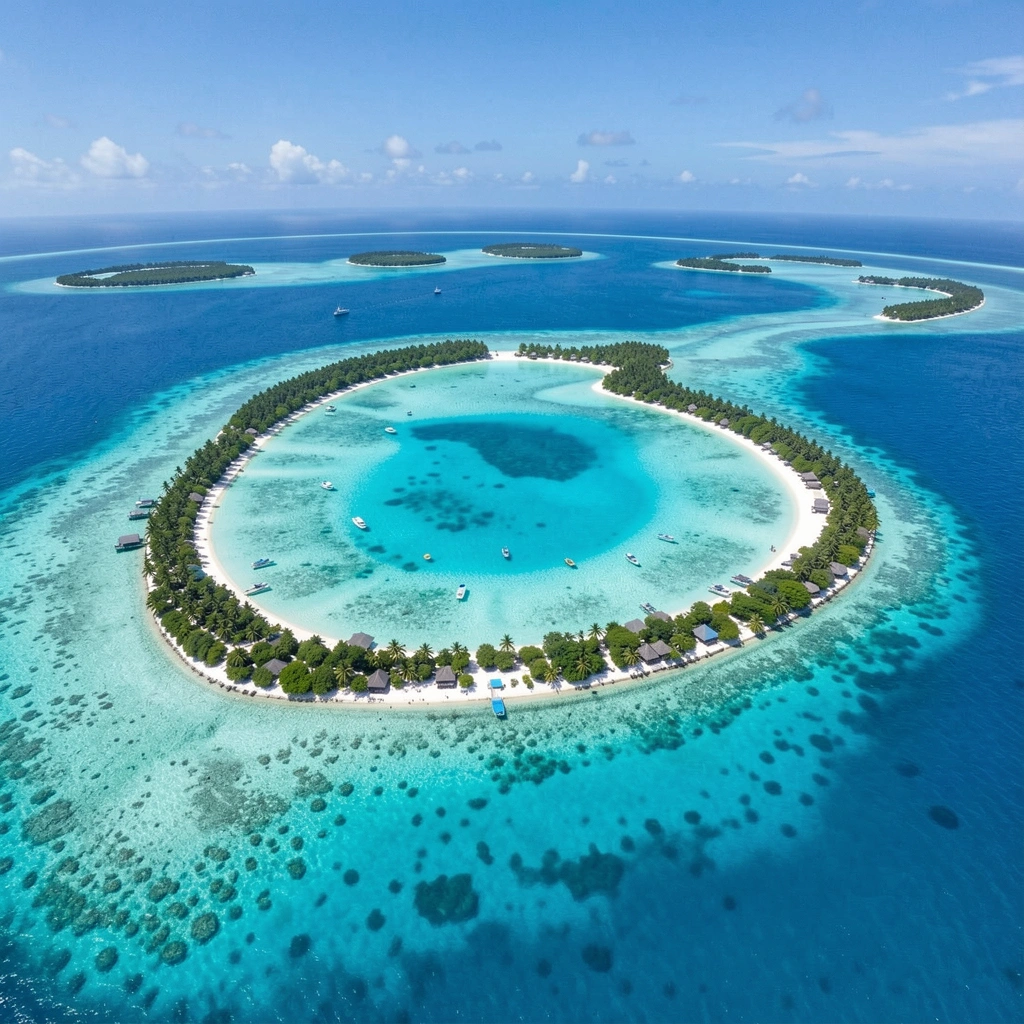
| Maldives | Very strong | One island, one resort — there is no alternative |
| Mauritius | Strong | Good resorts, though local dining is worth trying |
| Turkey and Egypt | Strong | Generous inclusions at low prices |
| Canaries and Balearics | Good | Depends heavily on resort location |
| Mainland Greece and Italy | Weaker | Local food is excellent and affordable — eat out |
Our Barbados, St Lucia and Antigua all-inclusive packages sit in the strongest value bracket for exactly this reason. So does Jamaica, which has the deepest all-inclusive market in the Caribbean.
In Greece and Italy the calculation flips. Eating out is part of the holiday and it is not expensive, so half board frequently beats all-inclusive on both cost and enjoyment. Our Greece versus Spain comparison covers that trade-off in more depth.
Does all-inclusive work at five-star and long-haul?
It works differently, and the difference is worth understanding before you pay a premium for it.
Four-star all-inclusive
Buffet-led, local-brand drinks, generous quantities. The value proposition is cost certainty, and it delivers that well. Expect limited à la carte access and standard spirits.
Five-star and premium all-inclusive
The proposition changes from cost control to convenience. Branded spirits, multiple à la carte restaurants, in-room minibar and sometimes watersports and activities. The upgrade cost is higher, but so is what sits inside it.
At this level, compare what the premium package includes rather than whether it is all-inclusive at all. Two five-star all-inclusive resorts can differ by hundreds of pounds a week in what you would otherwise pay for.
Long-haul
Long-haul all-inclusive generally represents better value than short-haul, for two reasons. Destination prices are often higher, and the resorts tend to be more isolated. Both push the arithmetic towards the wristband.
If you are combining destinations, board basis should be matched to each leg rather than applied uniformly. Our multi-centre holiday cost guide explains how that works across a two-stop trip, and the multi-centre holidays guide covers the itinerary structures.
All-inclusive for families
Families get more from all-inclusive than any other group, and the reason is behavioural rather than financial. Children eat and drink constantly and unpredictably. Removing every one of those decisions from the holiday is worth something on its own.
Beyond that, check three things. Child pricing varies widely between operators, and free child places are usually limited to specific dates and room types. Kids’ clubs are often included but may have age bands and booking requirements. And family rooms, interconnecting rooms and suites carry different supplements — sometimes a single larger room beats two standard rooms.
Free child places are released in limited numbers per flight and per hotel. They are not a discount applied at checkout — they are allocation. If your dates are fixed to school holidays, booking early is the only reliable way to get one.
All-inclusive for couples and adults-only resorts
Adults-only all-inclusive typically prices above the family equivalent in the same destination. You are paying for a quieter resort, better restaurants and a different atmosphere rather than for more inclusions.
For honeymoons the calculation is usually straightforward: premium all-inclusive at a five-star resort removes the running cost of a holiday where you will eat and drink well every day. Flag the booking as a honeymoon with the resort in advance, since recognition normally has to be requested rather than applied automatically.
Solo travellers face the opposite problem. Single supplements can add substantially to an all-inclusive price, because resort pricing assumes double occupancy. Ask specifically about single-occupancy rates rather than assuming the per-person price applies.

Eight ways to bring the price down
- Move your dates by a week. The week either side of a school holiday can cost dramatically less for near-identical weather.
- Fly midweek. Tuesday and Wednesday departures are consistently cheaper than Friday and Saturday.
- Check a second UK airport. Regional departures sometimes beat London, and occasionally the reverse.
- Compare 10 and 11 nights against 14. Flight pricing is not linear, and an odd-length stay can undercut a fortnight.
- Take the room, not the view. Sea-view and swim-up supplements are among the easiest costs to cut.
- Weigh the board basis honestly. Run the arithmetic above rather than defaulting to all-inclusive.
- Book the package, not the parts. Operator rates on resort allocation are rarely matched by booking separately.
- Ask for a price rather than accepting the advertised one. Advertised lead-ins are a starting point, not a final quote.
What goes wrong when booking all-inclusive
Five problems account for most disappointment, and every one is avoidable before you book.
Comparing two resorts on price alone. Two all-inclusive prices are only comparable once you know what each includes. Serving hours, spirit brands and à la carte access can be worth several hundred pounds a week.
Assuming transfers are in. They frequently are, but not always, and a private transfer bought on arrival costs considerably more than one bought with the package.
Booking a remote resort on half board. With nothing within walking distance, half board becomes resort-priced full board within two days.
Leaving insurance until the last minute. Cancellation cover only runs from the policy start date, so a late policy leaves the deposit period unprotected.
Ignoring flight times. A 6am departure and a late-evening return look like seven nights on paper and deliver rather less in practice.
Your all-inclusive booking timeline
| When | What to do |
|---|---|
| 9–12 months out | Book if your dates are fixed to school holidays or Christmas |
| At booking | Pay the deposit, take out insurance, check the ATOL certificate |
| 6–10 weeks out | The window for flexible off-peak bookings |
| 10–12 weeks out | Balance normally falls due — diarise this date |
| 4 weeks out | Check passport validity and any entry requirements |
| 1 week out | Confirm transfers, book à la carte restaurants, check drink hours |
Is all-inclusive worth it? Our verdict
All-inclusive is worth it when you are staying put, when local food and drink are expensive, and when knowing the final cost before you fly matters to you. That covers most Caribbean, Mexican, Maldivian and Turkish holidays, and most family holidays anywhere.
It is worth less when the destination itself is the attraction. In Greece, Italy and Spain’s better food regions, eating out is part of the point, and half board usually wins on both cost and experience.
The deciding factor is rarely the resort. It is how the two of you actually holiday — and that is a question worth answering honestly before you compare a single price.
Tell us your dates, your departure airport and roughly what you want to spend. We will compare all-inclusive against half board on the same resort, so you can see the actual difference rather than guessing at it. Every holiday we sell is ATOL protected.
All-inclusive holidays: frequently asked questions
Is all-inclusive cheaper than half board?
It depends on your daily spend. Divide the upgrade cost by nights and travellers to get a daily figure, then compare it to what you would spend on lunches and drinks. All-inclusive usually wins when a couple would otherwise spend more than about £40 to £50 a day.
What is not included in an all-inclusive holiday?
Premium and imported spirits, most à la carte restaurants beyond one or two bookings, motorised watersports, spa treatments, excursions, minibar restocking and local tourist taxes are normally excluded. Airport transfers are included in many packages but not all, so confirm rather than assume.
How far in advance should I book an all-inclusive holiday?
Book nine to eleven months ahead for school holidays and ten to twelve months for Christmas, because peak prices only rise. If your dates are flexible and off-peak, six to ten weeks ahead is when unsold capacity starts being discounted.
Are late all-inclusive deals cheaper?
Only on holidays that have not sold. An unsold seat earns nothing, so operators discount soft dates as departure nears. Peak school holidays and Christmas sell regardless of price, so waiting on those dates costs you money rather than saving it.
What does ultra all-inclusive mean?
Ultra or premium all-inclusive adds branded spirits, wider à la carte dining, in-room minibar and sometimes watersports or activities to the standard package. There is no industry definition, so check the specific inclusion list rather than relying on the label alone.
Do all-inclusive holidays include flights?
A package holiday advertised as all-inclusive normally includes return flights, accommodation on an all-inclusive board basis and usually transfers. A hotel-only all-inclusive rate covers the board basis at the resort but no flights, so check what the quoted price actually contains.
Are all-inclusive holidays ATOL protected?
A flight-inclusive package sold by a UK company should carry ATOL protection, which covers you financially if that company fails. It does not apply to hotel-only bookings or flights you book directly. You should receive an ATOL certificate as soon as you pay.
What is a low deposit holiday?
A low deposit secures your booking and your price for a small upfront payment, commonly advertised from around £19 to £49 per person. It spreads the cost rather than reducing the total, and the deposit is normally non-refundable if you later cancel.
When is the balance due on a package holiday?
Typically ten to twelve weeks before departure. That date is the real financial commitment on a low-deposit booking, so diarise it the day you book. Missing the balance date can be treated as a cancellation, with your deposit lost entirely.
What happens if the price drops after I book?
Your contract is at the price you agreed, so there is no automatic refund. Some operators will rebook you at a lower rate if availability allows, particularly if you ask promptly. First check the cheaper price is genuinely the same room, board basis and flights.
Do all-inclusive resorts include premium spirits?
Standard all-inclusive covers local brands only. Named whisky, gin, champagne and imported wines are usually charged separately at bar prices. Premium and ultra all-inclusive packages typically include branded spirits, which is often the main practical difference between the two tiers.
Are à la carte restaurants included in all-inclusive?
Usually included but limited. Most resorts allow one or two à la carte bookings per stay, with any additional visits charged. Tables also need reserving, often on arrival, so book them at check-in rather than waiting until midweek when they fill.
Do you need to tip at an all-inclusive resort?
Tipping is not usually required, and some resorts include gratuities in the package. It remains customary and appreciated in many destinations, particularly the Caribbean and Mexico. Check whether gratuities are included before budgeting, as practice varies by resort and country.
Do all-inclusive resorts charge resort fees or tourist taxes?
Local tourist taxes are common and are usually collected on arrival or at checkout, outside the package price. Resort fees are less common in tour operator packages than in direct hotel bookings, but always confirm before you travel so it is not a surprise.
Is all-inclusive worth it for families?
Usually yes, and the benefit is as much practical as financial. Children eat and drink unpredictably, and all-inclusive removes every one of those decisions. Check child pricing, kids’ club age bands and whether a family room beats booking two standard rooms.
Do children pay full price at all-inclusive resorts?
Rarely. Child pricing varies widely by operator, resort and room type, and free child places exist but are allocated in limited numbers per flight and hotel. They are allocation rather than a discount, so booking early is the only reliable way to secure one.
Is adults-only all-inclusive more expensive?
Typically yes, in the same destination. The premium buys a quieter resort, better restaurants and a different atmosphere rather than additional inclusions. Compare the inclusion lists directly, because the gap is about experience rather than what sits inside the package.
Is long-haul all-inclusive better value than short-haul?
Generally yes. Long-haul destinations often have higher local prices and more isolated resorts, and both factors push the arithmetic towards all-inclusive. Short-haul resorts in walkable towns give you far more realistic alternatives nearby, which weakens the case for paying the upgrade.
Is all-inclusive good value in the Caribbean?
It is among the strongest value anywhere. Much of the food and drink is imported, so eating and drinking outside the resort is expensive. Jamaica, Barbados, St Lucia, Antigua, Mexico and the Dominican Republic all have deep, competitive all-inclusive markets.
Is all-inclusive worth it in Greece or Italy?
Often not. Local food is excellent and affordable in both countries, and eating out is a large part of what you came for. Half board plus local restaurants usually beats all-inclusive on both cost and experience, unless your resort is genuinely isolated.
Related reading
If you are weighing up where to spend an all-inclusive week, these guides go deeper on the destinations and the costs:
- What multi-centre holidays really cost — full cost anatomy across every route we sell
- Caribbean multi-centre holidays — pairing two islands, and where all-inclusive fits
- Maldives holiday cost guide — where one-island resorts make all-inclusive close to essential
- Singapore and Bali holiday cost guide — a route where board basis should differ by leg
- Greece versus Spain — two destinations where eating out often beats the wristband
- Best time to visit the Maldives — how seasonality drives both price and availability
- All destinations — browse everywhere we sell