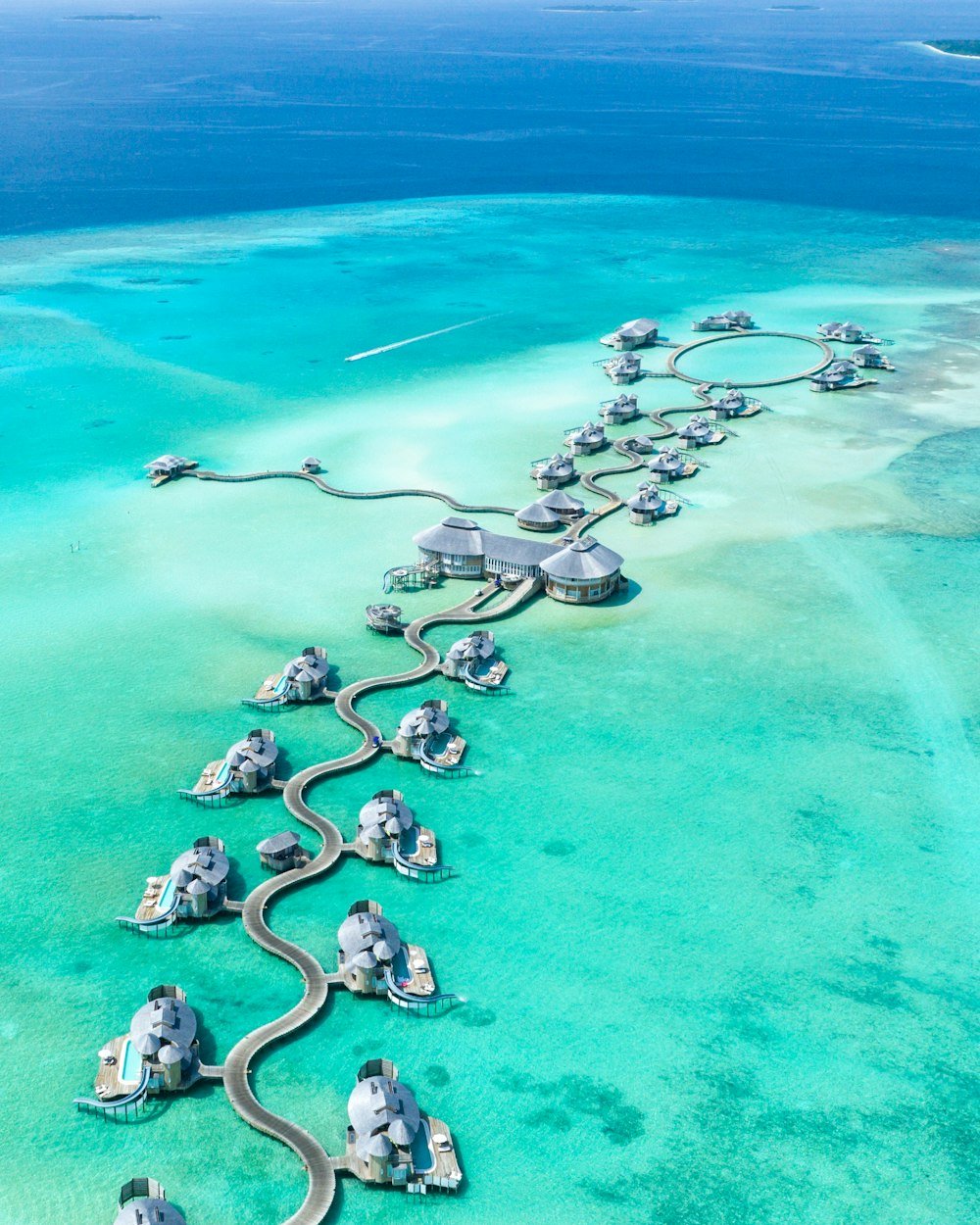
Overwater villas, house reefs teeming with life, and some of the clearest water on the planet — the Maldives is the long-haul escape every traveller daydreams about.
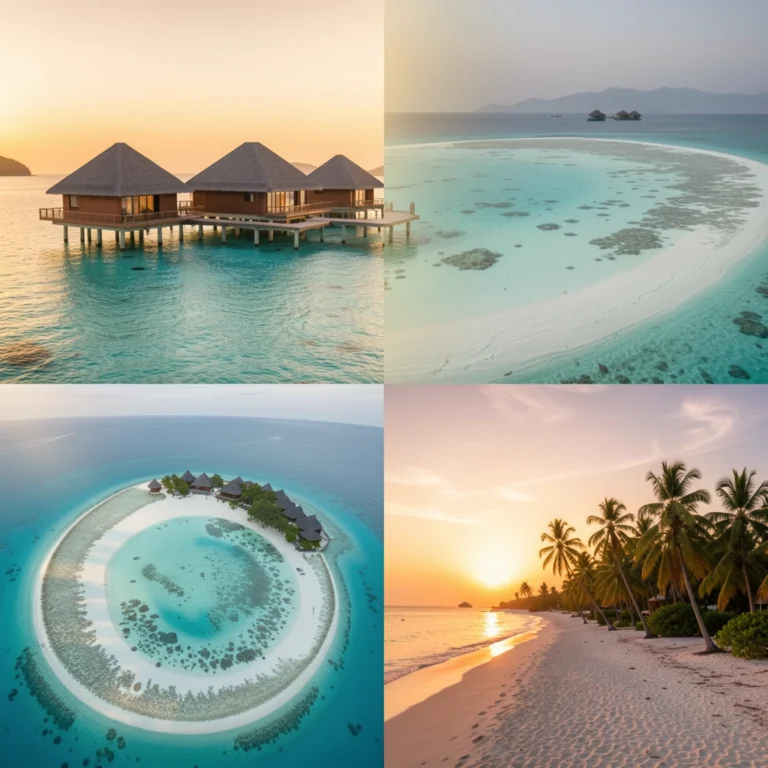
The Maldives is the holiday people picture when they close their eyes and imagine paradise: a string of low-lying coral islands scattered across the Indian Ocean, each one fringed with flour-soft sand and ringed by a lagoon so clear the boats above seem to float on air. It is a place built almost entirely around the idea of escape. There are no sprawling resort strips here, no traffic and no crowds — most resorts occupy a private island of their own, so from the moment you arrive the rest of the world quietly falls away.
The Maldives is made up of 1,192 islands grouped into 26 natural atolls, spread across roughly 300 kilometres of ocean. That geography is the single most important thing to understand before you book, because it decides how you reach your resort, how long it takes, and how much the transfer costs. Unlike most beach destinations where a short taxi ride gets you anywhere, here your island might be a 15-minute speedboat hop from the airport — or a 45-minute seaplane flight over a mosaic of reefs.
Velana International Airport, just outside the capital Malé, is where every international flight lands. From there, one of three transfer types carries you to your resort, and knowing which applies to your chosen island helps you plan arrival times and budget accurately.
Speedboat transfers serve resorts in the North and South Malé Atolls — broadly anything within about 30–40km of the airport. They run 24 hours a day, which makes them the practical choice if your flight lands late at night, and they have no strict luggage limits. Expect 15 to 60 minutes across sheltered, generally calm water.
Seaplane transfers reach the more remote central atolls and double as a once-in-a-lifetime experience in their own right — a low-altitude flight over jewel-coloured lagoons that many travellers rank among the highlights of the trip. The trade-offs: seaplanes only fly in daylight (roughly 6am to 4pm), so a late arrival may mean an overnight in Malé, and the cabins are warm and noisy rather than air-conditioned.
Domestic flights serve the far north and deep south. You fly on a small pressurised aircraft from Malé to a regional airport, then take a short speedboat to the resort. This combination handles weather and night-time arrivals better than a seaplane, at the cost of an extra connection.
The biggest mistake first-timers make is choosing the hotel before the island. In the Maldives the location shapes the holiday as much as the brand on the door. Here is how we steer our travellers.
Adults-only islands with private pool villas, overwater suites and in-villa dining deliver the seclusion couples come for. Many resorts will arrange champagne and canapés on a seaplane transfer or a private sandbank dinner if you tell them you are celebrating — usually at little or no extra cost, so it is always worth mentioning when you book.
Look to the North and South Malé Atolls. The short, sheltered speedboat transfers are far easier with children than a long seaplane wait, and the islands here tend to have shallow swimming lagoons, kids’ clubs and family or connecting villas. Several resorts run “kids stay and eat free” offers in the quieter months.
Baa Atoll (a UNESCO Biosphere Reserve) and South Ari Atoll are the headline acts, famous for manta rays and whale sharks. The green season’s plankton blooms are what draw these gentle giants, so the “low” season is paradoxically the best time for the most memorable marine encounters.
The Maldives has two seasons. The dry season, from November to April, brings the postcard weather — clear skies, low humidity and calm seas. This is peak time, and prices rise accordingly, especially over Christmas, New Year and Easter when the best villas sell out months ahead.
The green season, from May to October, is warmer and more humid with short, heavy showers that usually pass within the hour. In return you get noticeably lower prices, quieter islands and the best conditions for diving with mantas and whale sharks. If your dates are flexible, the shoulder weeks of late April and early November sit right between the two — near-perfect weather without the peak-season premium.
A week in the Maldives from the UK typically starts around £1,649 per person for an all-inclusive package on a value island with a short speedboat transfer, including return flights. Mid-range resorts and overwater villas run from roughly £2,400 to £3,000 per person, while the ultra-luxury names climb well beyond that. Choosing a speedboat island over a seaplane one, travelling in the green season, and booking early are the three levers that move the price most.
Because the right island depends so much on how you want to feel — secluded, sociable, active or simply still — we start there rather than with a hotel list. Tell us your dates, who is travelling and what matters most, and your dedicated expert matches you to the island that fits, confirms the transfer logistics, and finds the best available price. Every booking is ATOL protected.
Maldives accommodation falls into two broad camps, and the choice shapes both your experience and your budget. Beach villas sit on the sand with direct access to the lagoon — ideal for families, for anyone who likes to step straight onto the beach, and for keeping costs down. Overwater villas perch on stilts above the lagoon, reached by a wooden walkway, often with a deck ladder into the sea and sometimes a glass floor panel. They are the iconic Maldives image and command a premium of roughly 30–50% over an equivalent beach villa. Many couples split the difference, booking a few nights overwater for the experience and the rest on the beach.
It is tempting to do nothing at all in the Maldives, and that is a perfectly good plan. But the marine life is extraordinary, and a little effort is richly rewarded. Snorkelling straight off your villa or the house reef is included almost everywhere; diving is world-class, with schools on most islands catering to beginners and experts alike. Sunset dolphin cruises, sandbank picnics on a private slip of sand, night fishing and spa treatments in overwater pavilions round out the days. For the truly memorable, time a green-season trip to swim with whale sharks or manta rays in the southern atolls.
The Maldives is a Muslim country, and while resorts operate as relaxed private islands where normal beachwear and alcohol are entirely standard, modest dress is expected if you visit an inhabited local island. The US dollar is widely used alongside the local rufiyaa, and resort bills are usually settled by card at checkout. Tipping is appreciated but not compulsory. Crucially, build your transfer into your flight planning: if you are heading to a seaplane resort and your flight lands after about 3.30pm, you may need a night in Malé before flying out the next morning, so we factor this in when we book.
The Maldives is the definitive special-occasion destination — honeymoons, milestone anniversaries, significant birthdays and once-in-a-lifetime family trips. It rewards travellers who want genuine seclusion and natural beauty over nightlife and sightseeing. Families are increasingly well catered for, particularly on the closer atolls, while couples have an almost limitless choice of romantic, adults-only islands. If your idea of the perfect holiday is warm water, soft sand, exceptional service and absolutely nowhere you need to be, few places on earth do it better.
A 7-night package typically starts from around £1,649 per person all-inclusive on a value island with a speedboat transfer, including return flights. Overwater villas and luxury resorts generally run from £2,400–£3,000+ per person. Travelling in the green season (May–October) and booking early reduces the price most.
November to April offers the driest, sunniest weather and calm seas — this is peak season. May to October is warmer with short showers but better value, quieter islands, and the best diving with manta rays and whale sharks.
Speedboats serve resorts near Malé (North and South Malé Atolls), run 24 hours, and suit families and late arrivals. Seaplanes reach more remote atolls and are a spectacular experience but only fly in daylight, so a late flight may require an overnight in Malé.
Yes. Choose a resort in the North or South Malé Atolls for a short, sheltered speedboat transfer, a shallow swimming lagoon and a kids’ club. We steer families toward these islands rather than remote seaplane resorts.
Around 10.5 hours direct from London to Malé, plus your resort transfer of 15–60 minutes by speedboat or up to around 45 minutes by seaplane.
Yes — every package we sell is ATOL protected, so your money and your trip are covered.
No call centres, no pressure. One dedicated consultant builds your perfect trip and finds the best price — fully ATOL protected.