
Greece Luxury Holidays
Island-hopping, ancient ruins and easy Mediterranean sun a short flight from home — Greece is the dependable family and couples favourite.
Quick answer
How much does a Greece holiday cost from the UK, and which island should you choose?
Our Greece package starts at £459 per person for four nights in Athens and Santorini, including return flights. Greece is roughly three and a half hours from London and British passport holders need no visa for stays of up to 90 days. Choose Crete or Rhodes for the widest range of family resorts, Santorini or Mykonos for couples, and Kos or Zante for flat terrain and short transfers.
Greece holiday deals
Contracted rates with full ATOL 10713 protection and low deposits.
Planning your Greece holiday
Greece is about three and a half hours from the UK, which makes it one of the few destinations that works as well for a long weekend as for a fortnight. The season runs May to October. The decision that shapes the holiday is not the country but the island: Crete and Rhodes behave quite differently from Santorini and Mykonos, and picking the wrong one is the most common way a Greek holiday disappoints.
The beauty of the islands
The mainland has Athens and the Peloponnese, but most UK holidaymakers are choosing between islands, and they are not interchangeable. Here is how the main ones differ.
Crete
The largest Greek island offers the most variety: superb family resorts, long beaches, mountains, historic Knossos and excellent food. For everything in one place, Crete is the safe and rewarding choice, and it has the widest range of all-inclusive hotels.
Rhodes
Reliable sunshine, sandy beaches and a remarkable medieval Old Town make Rhodes a favourite for families who want a little history alongside the beach. The south of the island is quieter; the resorts around the north and east coast are livelier.
Kos
Flat, green and easy to get around by bike, Kos suits younger families and first-time island-goers. Long sandy beaches and a compact harbour town keep things simple.
Zante & Kefalonia
Zante and Kefalonia have the Ionian scenery most people picture, Shipwreck Beach’s turquoise cove included, with relaxed resorts and good beaches. Kefalonia is the quieter and more low-key of the two.
Santorini & Mykonos
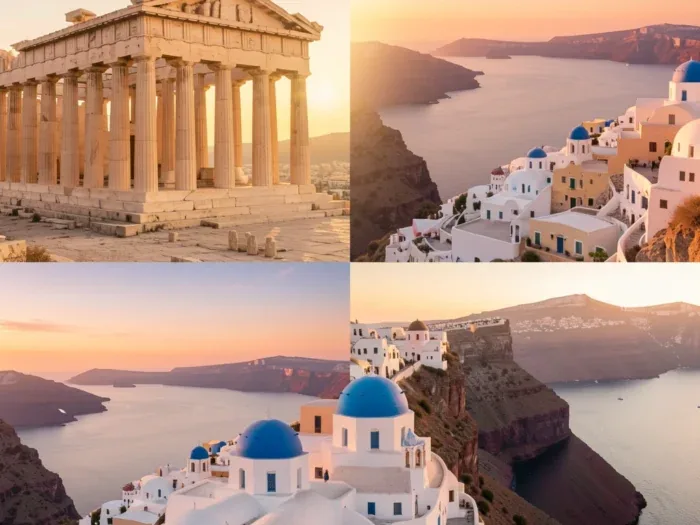
The famous Cyclades pair lean stylish and romantic rather than family-focused. Santorini’s caldera views and Mykonos’s whitewashed glamour are best for couples and groups happy to trade big sandy beaches for atmosphere and style.
When is the best time to visit Greece?
The Greek season runs from May to October. June and September are the sweet spots — full summer warmth and warm seas without the peak-July crowds or prices, and ideal for families tied to the school calendar at the very start or end of the holidays. July and August are the hottest and busiest months, when the best resorts book up early and prices peak. May and October are warm and quiet, perfect for couples and walkers, though some smaller resorts wind down by late October.
All-inclusive done well
Greece offers some of the strongest all-inclusive value in the Mediterranean, from simple family villages to polished five-star resorts with multiple restaurants and proper kids’ clubs. All-inclusive makes particular sense on the larger, resort-led islands like Crete, Rhodes and Kos, where you can settle into one excellent hotel and let everything be taken care of. On the smaller, more characterful islands, half-board or bed-and-breakfast often works better, leaving you free to explore the tavernas.
If board basis is what you are weighing up, how to get the best all-inclusive deal sets out what all-inclusive does and does not cover, and when half board works out better.
What does a Greece holiday cost?
Our Greece package — four nights in Athens and Santorini — starts at £459 per person including return flights. Everything else in Greece we build to order, so there is no standard rate to quote you: an all-inclusive week in Crete or Rhodes, a two-island hop, or a stay in a smaller adults-only property are each costed against your dates, island and resort. Travelling in June or late September, and booking early for July and August, gives the best combination of weather and price.
Timing moves the price more than most people expect. We priced 72 of our own holidays month by month in the cheapest month to book a holiday — December runs a median 22% above the same holiday’s cheapest month, November just 5%.
How we plan it
The work is in matching the island and the resort to who is travelling: lively or quiet, beach-led or scenic, all-inclusive or free to eat out. Tell us who is coming and what you are picturing, and your consultant will suggest the island that fits and price it for your dates. Every booking is ATOL 10713 protected.
Getting around
On the larger islands like Crete, Rhodes and Kos, a hire car is the best way to reach hidden beaches, hilltop villages and archaeological sites at your own pace — roads are good and distances manageable. On smaller islands you may not need one at all, with resorts, beaches and tavernas within walking or short-taxi distance. Inter-island ferries make island-hopping possible if you want to combine two islands in one trip, though for a single relaxing week most travellers settle happily into one base.
Food and culture
Greek food is one of the great pleasures of the holiday: simple, fresh and generous. Expect grilled fish and meats, garden vegetables, feta and olive oil, and long lunches that drift into the afternoon. Even on all-inclusive holidays it is worth stepping out to a family-run taverna at least once — the welcome is part of the experience. Beyond the table, Greece’s history is everywhere: the Palace of Knossos on Crete, the medieval walled city of Rhodes, ancient temples and hilltop monasteries reward even a half-day of curiosity.
Best beaches
Greek beaches range from organised, blue-flag family sands with loungers and watersports to wild, scenic coves you reach by boat or a scramble down a cliff path. Crete’s Elafonissi and Balos lagoons are famous for their pink-tinged sand and shallow turquoise water; Zante’s Navagio (Shipwreck) Beach is the postcard image of the Ionian; Rhodes and Kos offer long, easy stretches ideal for families. If a particular kind of beach matters to you, it is worth choosing your island and resort around it — we can advise.
Practical tips
Greece uses the euro, and cards are widely accepted in resorts though it is wise to carry some cash for smaller tavernas and kiosks. The sun is strong from June to August, so pace beach days and stay hydrated. Many resorts and tavernas are seasonal, opening from late April or May and winding down through October, which is part of why the shoulder months feel so relaxed. Tap water is safe on the mainland and most larger islands; bottled is common on smaller ones.
Who is Greece right for?
Greece is wonderfully broad in its appeal. Families thrive on Crete, Kos and Rhodes; couples gravitate to Santorini, Kefalonia and the quieter corners; groups of friends enjoy the energy of Zante or Mykonos; and history-lovers and walkers find endless reward in the shoulder seasons. With short flights and strong value, it works equally well as a first family holiday abroad or a relaxed return trip you make year after year.
Still deciding between the two big Mediterranean options? We compare them directly in Greece vs Spain: which beach holiday wins.
Greece FAQs
Crete for variety and the widest choice of family all-inclusive resorts; Kos for flat, easy terrain and long sandy beaches; Rhodes for sunshine, beaches and a little history. Zante and Kefalonia suit families who want dramatic scenery.
Our Greece package, four nights in Athens and Santorini, starts at £459 per person including return flights. Longer island stays and all-inclusive weeks are built to order, so we price them against your exact dates, island and resort rather than quote a standard rate. June and late September usually give the best balance of weather and price.
May to October. June and September give full summer warmth without peak-July crowds or prices. July and August are hottest and busiest; May and October are warm and quiet, ideal for couples.
Santorini and Mykonos for style and romance; Kefalonia for a refined, low-key feel. May, June, September and October are the most pleasant months for a couples’ trip.
Around 3.5 hours to most islands, making Greece practical for both short breaks and longer holidays.