What does a Copenhagen Christmas break include, and what does it cost?
Three nights from £449 per person, covering return flights from London, the Scandic Spectrum or similar 4★, cabin baggage and full ATOL protection under licence 10713. Rooms are room only — breakfast, meals, Tivoli entry and market spending are not included, and neither is travel insurance. Regional UK departures are available at a supplement. Copenhagen is the Nordic entry on our Christmas list, and it is a different proposition from the German and Alsace markets: fewer wooden chalets, more design, and Tivoli Gardens turned into something close to a small city of lights.
Copenhagen or a German-style Christmas market?
This is the choice worth thinking about before you book, because Copenhagen is not a traditional market town and people occasionally arrive expecting one.
Choose Copenhagen for the atmosphere, the design and Tivoli after dark. Choose Alsace or Germany if you want the classic market experience with rows of chalets and the smell of mulled wine down every street. Both are good trips; they are not the same trip.
What you will actually see
Tivoli Gardens is the centrepiece and the reason most people come. The pleasure gardens are decorated and lit for the season — around half a million lights — with a Christmas market inside, rides running, and the whole thing arranged as a single designed experience rather than a collection of stalls. Entry is not included in the package; it is a separate ticket and worth budgeting for.
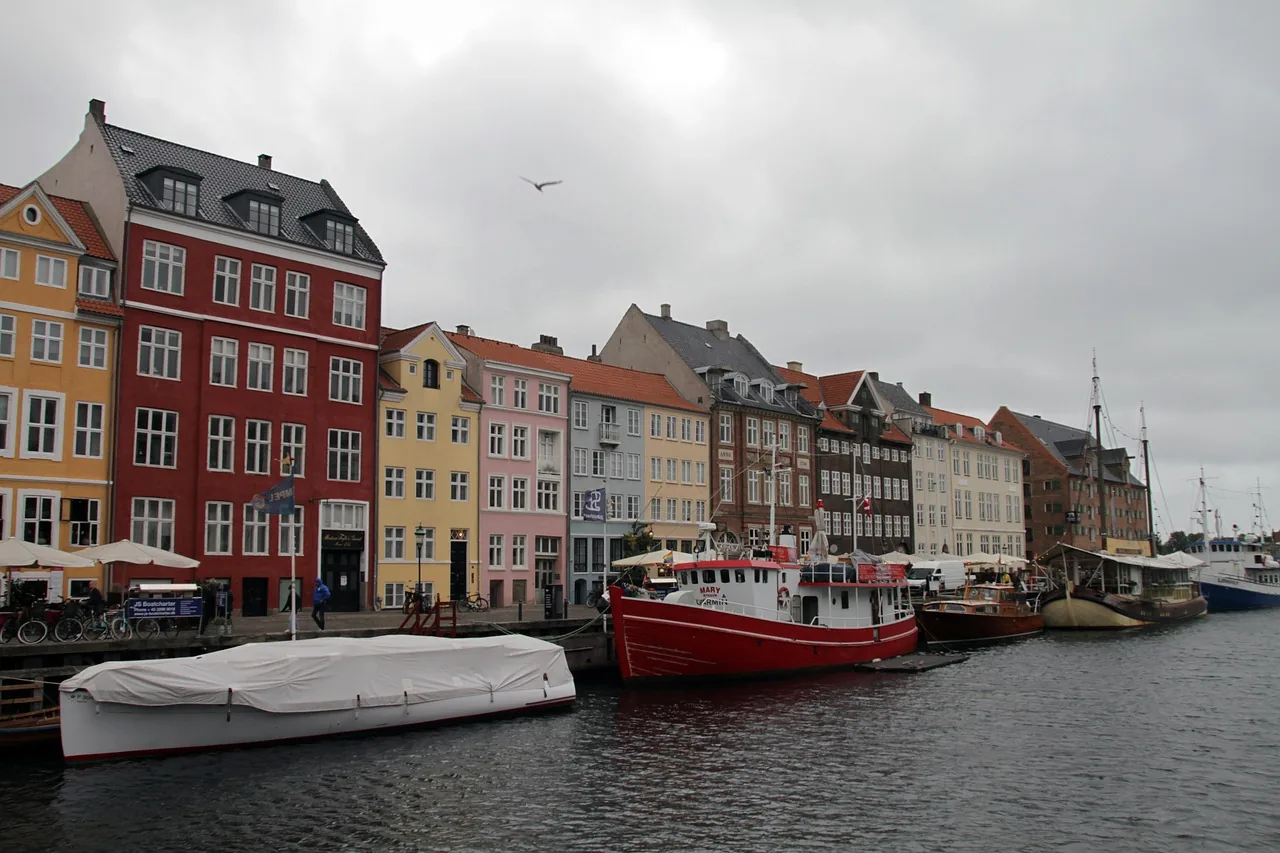
Nyhavn is the harbour everyone photographs: painted eighteenth-century houses along a canal lined with wooden boats. Lit for Christmas with a market along the quay, it is the image of Copenhagen in winter and it is a short walk from the centre.
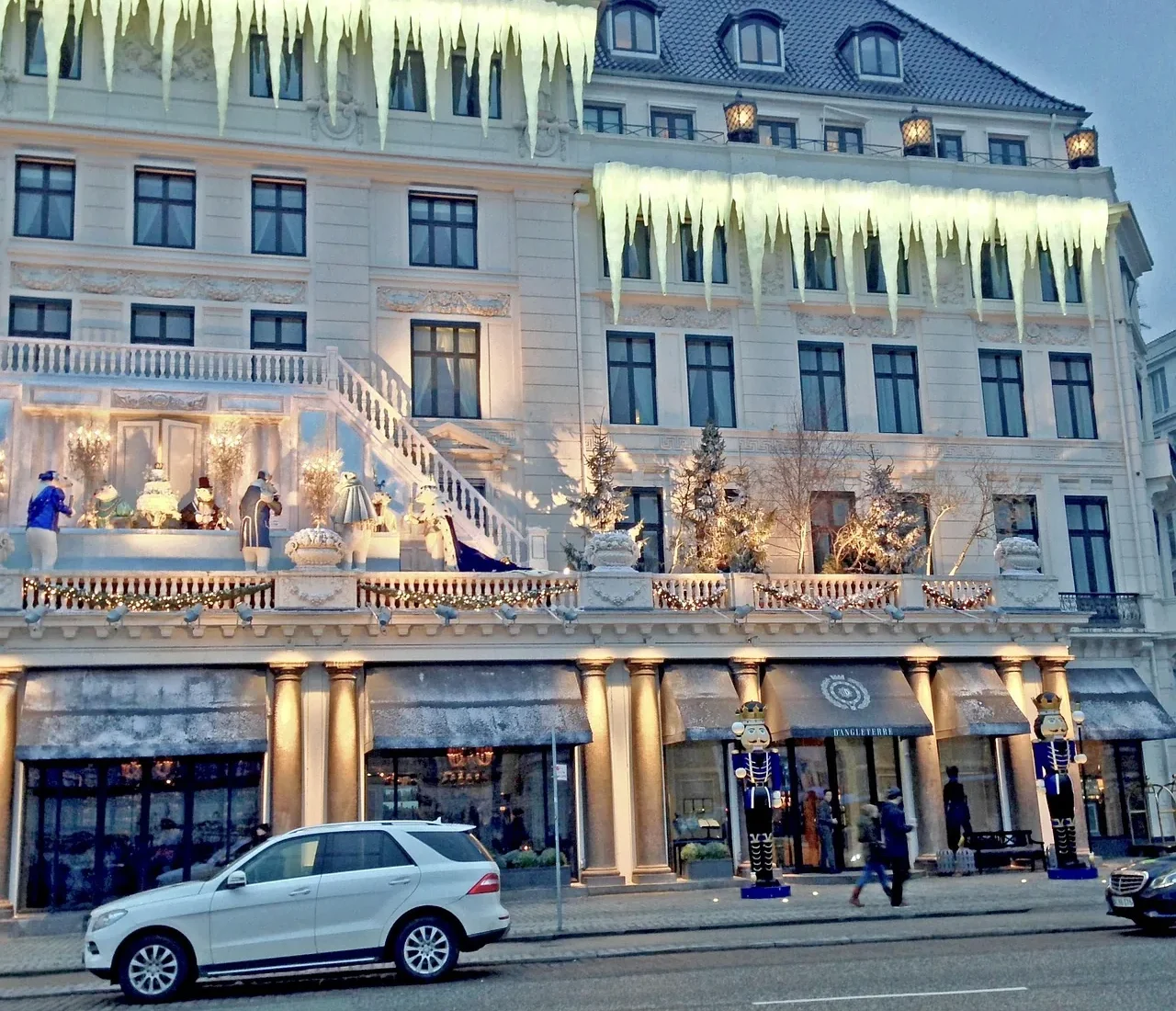
Beyond those two, smaller markets appear across the city, and the city itself is the draw — Copenhagen in December does hygge without irony, and an afternoon spent moving between cafés is a legitimate way to spend the trip.
The food and drink are Nordic: gløgg, the Danish mulled wine, usually served with raisins and almonds in the bottom of the glass, and æbleskiver, spherical pancake balls dusted with sugar and eaten with jam.
Is three nights the right length?
Yes. Copenhagen is compact and walkable, and three nights gives you Tivoli properly on one evening, Nyhavn and the harbour on another, and a day for the city itself — the design museums, the cafés, the streets.
Two nights would work but Tivoli deserves a full evening on its own rather than being fitted around arrival. Four nights starts to be more city than Christmas, though Copenhagen rewards that if you want it.
One practical note: December daylight in Copenhagen is short even by northern European standards, running from roughly half past eight in the morning to half past three in the afternoon. That sounds bleak and is in fact the point — the lights are doing their work for most of your waking day.
When does Christmas in Copenhagen run?
Danish Christmas markets and the Tivoli season generally run from mid-November to just before or just after Christmas, which is a slightly longer window than the German and Alsace markets. Tivoli publishes its official dates closer to the season, so we confirm the exact dates for your departure at enquiry.
Midweek is quieter than the weekend, though Copenhagen handles crowds better than a small market town does — the city is simply bigger than the event. Weekends are busier at Tivoli itself rather than across the city.
What changes your price?
- Departure airport. The price is from London, with Heathrow and Gatwick at no supplement. Regional UK departures carry a supplement confirmed at enquiry.
- Dates. November and December are held at the same lead-in price on the package, so the month is not the lever here. Weekends and the run-up to Christmas sell first.
- Hotel and room grade. The Scandic Spectrum is 4★. Larger rooms, upgraded categories and alternative properties are quoted individually.
- Nights. Extra nights at either end are priced on request.
- What you spend once there. This matters more in Copenhagen than almost anywhere else on our Christmas list.
Who this holiday suits
- Anyone who wants Christmas atmosphere without the wooden-chalet formula.
- Couples after a design-led city break that happens to be beautifully lit.
- Travellers who have done the German markets and want something genuinely different.
- Families with children old enough for Tivoli’s rides, which run through the season.
- People who like short dark days, good coffee and being indoors between outings.
Who might prefer something else
- For a traditional market, with hundreds of chalets and crafts, Nuremberg, Dresden or Strasbourg give you that and Copenhagen does not.
- If the budget is tight, Copenhagen is an expensive city and the package price is only part of what you will spend. Budapest or Prague go much further.
- Want daylight? December here gives you about seven hours of it. That is part of the charm but it is not for everyone.
- If Tivoli is the whole reason, note that entry is a separate ticket and not included in the package.
- Prefer breakfast included? This is room only. Ask and we will price a bed-and-breakfast version.
- Comparing options? You can see all our city breaks side by side.
Ways to upgrade
All quoted at enquiry against your dates.
- A higher room category or a larger room at the Scandic Spectrum
- An alternative hotel, including design properties closer to Nyhavn
- Bed and breakfast in place of room only
- Hold luggage
- Extra nights, or a second Nordic city added to the trip
- A private airport transfer rather than the standard arrangement
Getting there
Flights are from London, with Heathrow and Gatwick at no supplement and regional departures available at a cost confirmed at enquiry. Copenhagen is around two hours from London.
The airport is unusually well connected — the metro runs from the terminal into the city centre in about fifteen minutes, which is faster and cheaper than a taxi and runs through the night. Once in the city, Copenhagen is walkable and flat, and the metro covers anything further.
Entry requirements for UK travellers
Checked against GOV.UK foreign travel advice on 17 September 2026.
Denmark is in the Schengen area, so British passport holders need no visa for stays of up to 90 days in any 180-day period. Your passport must have been issued within the last 10 years of your arrival date and be valid at least three months after you leave. A passport renewed early before October 2018 may carry months that no longer count.
The EU’s biometric Entry/Exit System is rolling out, replacing passport stamping with fingerprints and a photograph on your first crossing. It is free, the record lasts three years, and the practical effect is extra time at the border the first time. ETIAS is not currently required.
Practicalities worth knowing
Denmark does not use the euro. The currency is the Danish krone, and this catches out a surprising number of people who arrive with euros from a previous trip. In practice you barely need cash at all — Copenhagen is close to cashless and cards work everywhere, including market stalls.
It is an expensive city, and that is worth planning for rather than discovering. Eating and drinking out costs noticeably more than in the German or central European market cities, so the total cost of the trip is further above the package price here than it would be in Budapest or Prague.
December is cold, often windy off the water, and dark by mid-afternoon. Layers and a windproof coat matter more than heavy insulation.
Booking and protection
This trip is covered by our ATOL licence 10713, and we hold IATA accreditation 91285611. One UK consultant handles your booking from enquiry to return.
Copenhagen sells more steadily than the small Alsace towns, but December weekends still go first and the week before Christmas tightens quickly.


 City & Beach
ATOL Protected
Thailand
Bed & Breakfast