What does a Seville city break include, and what does it cost?
Three nights at the Hotel Becquer Seville or similar 4★ with return flights from London and daily breakfast listed in the package. ATOL protection under licence 10713 applies and a £99 per person deposit holds it. Regional UK airports are available at a supplement confirmed at enquiry. Attraction entry, the city tourist tax, transfers and travel insurance are not included, and your meal arrangement is confirmed in writing before you pay. It suits anyone after Andalusia without a hire car. What you pay depends on your travel dates, how many nights you want and which UK airport you fly from.
When should you go, and when should you not?
Seville prices differently from every other European city we sell, and it is worth understanding before you book.
August is the most expensive month, and it is also the worst possible time to be there. Seville is among the hottest cities in Europe in high summer — routinely above 40°C, with much of the city shut in the afternoon. That price is school-holiday demand, not a reflection of the destination. You would be paying the most for the least pleasant version of the trip.
November is the cheapest and it is genuinely lovely — warm days, cool evenings, and the city functioning normally rather than hiding from the sun.
If your dates are flexible at all, October to April is a different city from June to September — and cheaper.
What you will actually see
The Real Alcázar is the reason most people come. A working royal palace begun under Moorish rule and extended for eight centuries since, with gardens that are worth as much time as the interiors. Entry is not included and timed slots sell out, particularly in spring — book before you travel.
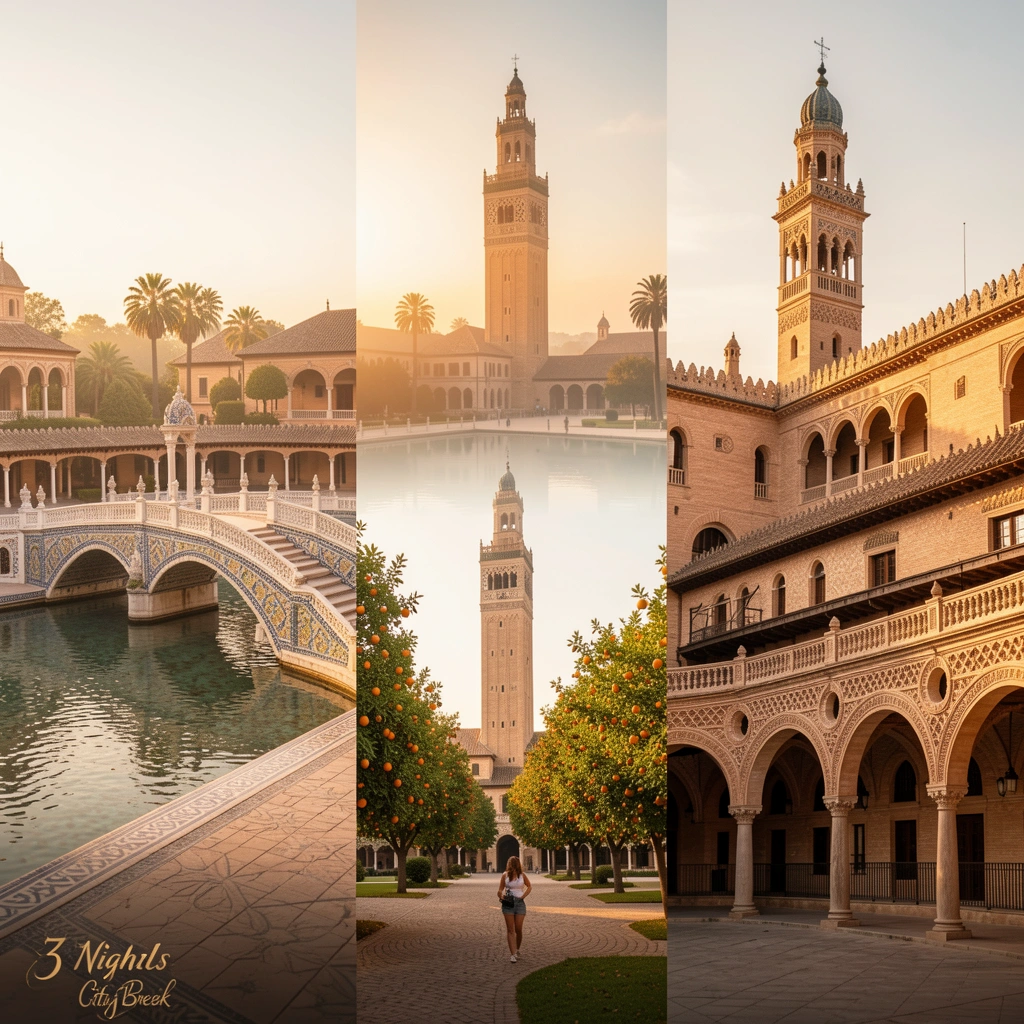
The cathedral and the Giralda sit opposite. It is the largest Gothic cathedral in the world by volume, and the Giralda is a former minaret you climb by ramp rather than stairs, which is unexpectedly civilised.
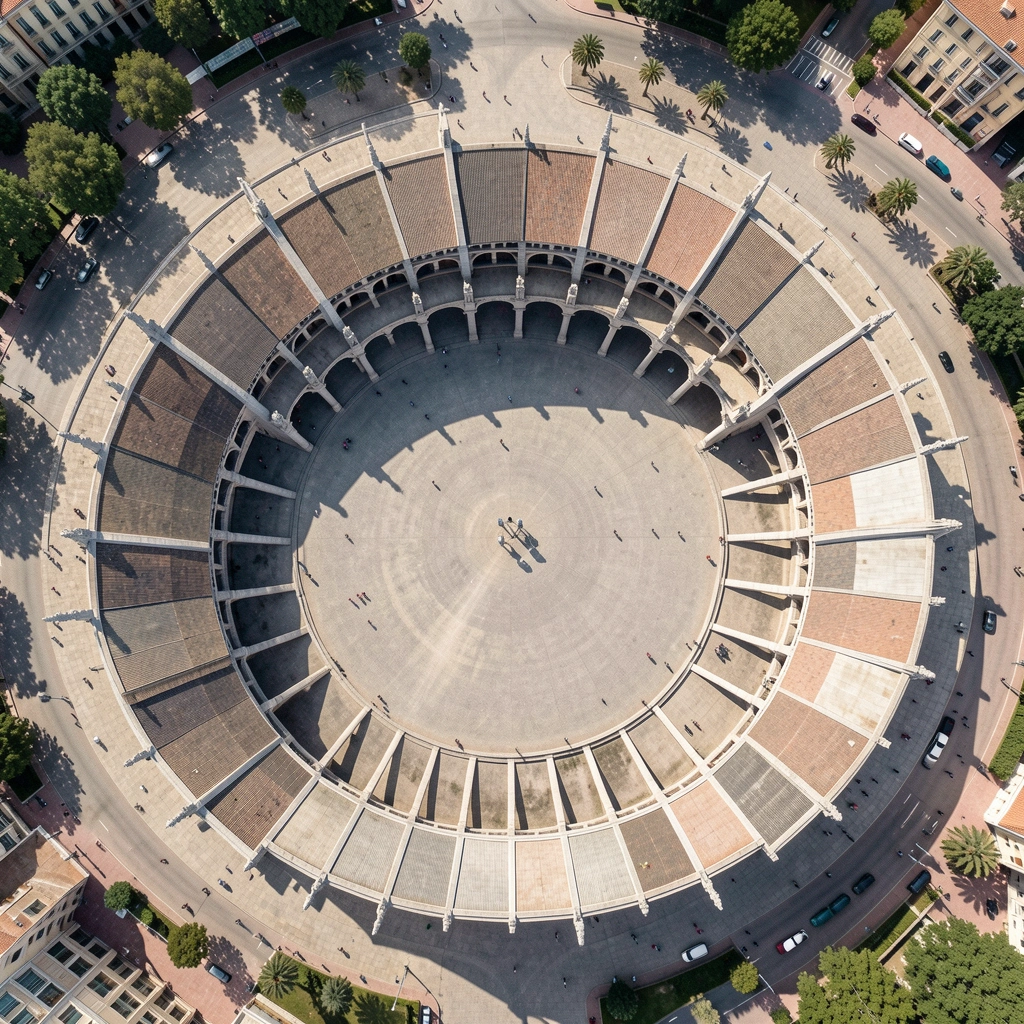
Plaza de España is a twentieth-century set piece rather than an ancient one, and none the worse for it — a vast tiled crescent with a canal you can row on. It is free and best in the late afternoon.
Triana and Santa Cruz are the two quarters to walk. Santa Cruz is the old Jewish quarter, a maze of lanes beside the cathedral. Triana, across the river, is where flamenco actually lives and where the tapas bars are less priced for visitors.
Is three nights the right length?
Yes. Seville is compact and almost entirely walkable, and three nights gives you two full days — one for the Alcázar and cathedral, one for the quarters and Plaza de España — with a third evening for flamenco and a long dinner.
Two nights would work but leaves you choosing between the Alcázar and everything else. Four is worth it only if you intend a day trip: Córdoba is forty-five minutes by high-speed train and Granada around three hours, both of which are genuinely tempting once you are there.
Seville is built for walking and hostile to hurrying. The old centre is a knot of narrow lanes that no map survives contact with, and getting lost in Santa Cruz for an hour is the point rather than a failure.
Eat late and eat standing up. Sevillanos rarely sit down to dinner before nine, and the best tapas bars are places you stand at the counter, order two things, pay and move on. Three bars in an evening beats one table.
What changes your price?
- The month. November at its cheapest against August at its dearest — and unusually, the expensive month is the worse one.
- Departure airport. Priced from London, with regional UK airports at a supplement confirmed at enquiry.
- Hotel and room grade. The Hotel Becquer or similar is 4★; larger rooms and properties inside Santa Cruz are quoted individually.
- Nights. A fourth night for a Córdoba or Granada day trip is priced on request.
- Semana Santa and the Feria de Abril. Both fill the city and both move year to year — tell us if you want them or want to avoid them.
Who this holiday suits
- Anyone who wants Andalusia without hiring a car.
- Couples after a warm, walkable, food-led break outside the summer months.
- Travellers drawn to Moorish architecture — the Alcázar is the finest example you can reach on a short flight.
- People who like eating late and standing up.
- Anyone looking for winter warmth in Europe without going to the Canaries.
Who might prefer something else
- If July or August are your only dates, the heat is genuinely limiting and you would be paying peak for it. Northern Spain or a beach would serve you better.
- For beaches, Seville is inland. Our Costa del Sol or Valencia packages put you on the coast.
- For a big-city break, Seville is mid-sized and winds down early. Madrid or Barcelona suit that better.
- Want a named hotel in a specific quarter? Ask — the standard package is a 4★ we confirm rather than one you choose.
- If nightlife is the point, Seville’s evenings are long but they are about eating and flamenco rather than clubs.
- Still weighing it up? Compare this against every one of our city breaks.
- If this is nearly right, look at our 2 Nights Madrid City Break too before you decide.
Ways to upgrade
All quoted at enquiry against your dates.
- A larger room or a higher category at the Becquer
- A hotel inside the Santa Cruz quarter or with a roof terrace
- Real Alcázar and cathedral timed entry booked in advance
- A flamenco performance at a tablao rather than a tourist show
- A fourth night for Córdoba or Granada by high-speed train
- Airport transfers rather than the bus or a taxi
Seville or Madrid for a Spanish city break?
Both are here’s list of things people weigh up, and they are not interchangeable.
Seville is the more atmospheric and the better winter choice. Madrid has the galleries and rewards a longer stay. If you have done one Spanish city and want somewhere that feels different rather than bigger, Seville is the one.
Getting there and getting around
Flights are from London with regional UK airports at a supplement confirmed at enquiry. Seville is around two and a half hours from the UK and Spain is one hour ahead.
Transfers are not included. The airport bus into the centre is inexpensive and takes around half an hour; taxis are a fixed-fare run. Once you are in the city you will not need transport at all — the historic centre is compact, largely pedestrianised and flat, which after Florence or Lisbon is a relief. Córdoba is forty-five minutes away by high-speed train.
Entry requirements for UK travellers
Checked against GOV.UK foreign travel advice on 17 September 2026.
Spain is in the Schengen area, so British passport holders need no visa for stays of up to 90 days in any 180-day period. Your passport must have been issued within the last 10 years of your arrival date and be valid at least three months after you leave. The 10-year rule catches out anyone who renewed early before October 2018.
The EU’s biometric Entry/Exit System is rolling out, replacing passport stamps with fingerprints and a photograph on your first crossing. It is free, lasts three years and speeds up later trips. ETIAS is not currently required.
Practicalities worth knowing
Spain charges a city tourist tax in some regions, payable at the hotel rather than in the package price. Your hotel will tell you at check-in what applies.
Seville eats late — lunch from two, dinner rarely before nine. Turning up at seven means an empty room and a kitchen that has not started. Adopt the rhythm and the evenings are the best part of the trip.
Tapas in Andalusia are ordered and paid for rather than given free with a drink; that is Granada, not Seville. Portions are larger here to compensate, and two or three between two people is a meal.
Book the Alcázar before you travel. It uses timed entry and sells out in spring, and queueing on the day costs you a morning you do not have on three nights.
Booking and protection
This trip is covered by our ATOL licence 10713 and we hold IATA accreditation 91285611. It is held with a deposit of £99 per person, with the balance due before travel.
Prices are per person, based on two people sharing. November, January and February are the three cheapest months and three of the most comfortable — which on this particular city is an unusually clear recommendation.


 Save 20%
ATOL Protected
Ibiza
Room Only