What does this Italy multi-city holiday include, and what does it cost?
Six nights across Venice, Florence and Rome — typically two in each — with a central 4★ hotel and daily breakfast in every city, the high-speed rail connections between them, return flights from London and full ATOL protection under licence 10713. The advertised lead-in price is £399pp based on two adults sharing, reduced from £510pp, and it holds with a £99pp deposit. It suits first-time visitors to Italy who want the three headline cities in one trip. Attraction entry and transfers are not included. Your exact price is confirmed at enquiry.
Why do all three in one trip?
Italy’s three headline cities sit on one high-speed rail line, and that changes what is possible in a week. Florence to Venice takes about two hours on the fastest Frecciarossa and Italo services; Rome to Florence is closer to an hour and twenty minutes. You spend a morning on a train rather than a day getting anywhere.
They are also genuinely different from each other. Venice is a maze on water with no traffic at all. Florence is compact, Renaissance and walkable end to end in twenty minutes. Rome is vast, layered and noisy. Doing them in sequence gives you three distinct cities rather than three versions of the same one.
How the six nights split
Two nights in each is the standard shape and it works, with the caveat that two nights in Rome is tight. Want to weight it? Take a night from Venice and give it to Rome — Venice is small and two full days covers it comfortably, while Rome could absorb a week.
Three cities, or one?
For a first visit, three cities is the right call — you will know afterwards which one you want to come back to.
How much does a Venice, Florence and Rome trip cost?
The advertised lead-in price is £399pp for six nights, reduced from £510pp, including return flights from London, three 4★ hotels, daily breakfast, the train connections between cities and full ATOL protection.
January is the lowest month, with February and November close behind. July is the highest and August close behind. Given you are covering three cities, the shoulder months are noticeably better value than the same trip in summer.
Budget separately for attraction entry, which is the real cost of this itinerary: the Uffizi and Accademia in Florence, the Vatican Museums and Colosseum in Rome. Book the timed slots in advance for all of them.
What can change your final price?
- Travel dates — the package runs from January at its cheapest to July at its dearest.
- Departure airport — the price shown is from London; regional departures are quoted at enquiry.
- How the nights are split — weighting more nights to Rome is straightforward to price.
- Room category — the lead-in is a standard room in each hotel.
- Hotel location — central Venice in particular prices well above the mainland.
- Extra nights, or adding Milan or Naples to the route.
- City tourist taxes — payable at each of the three hotels.
What you will see in each city
Venice
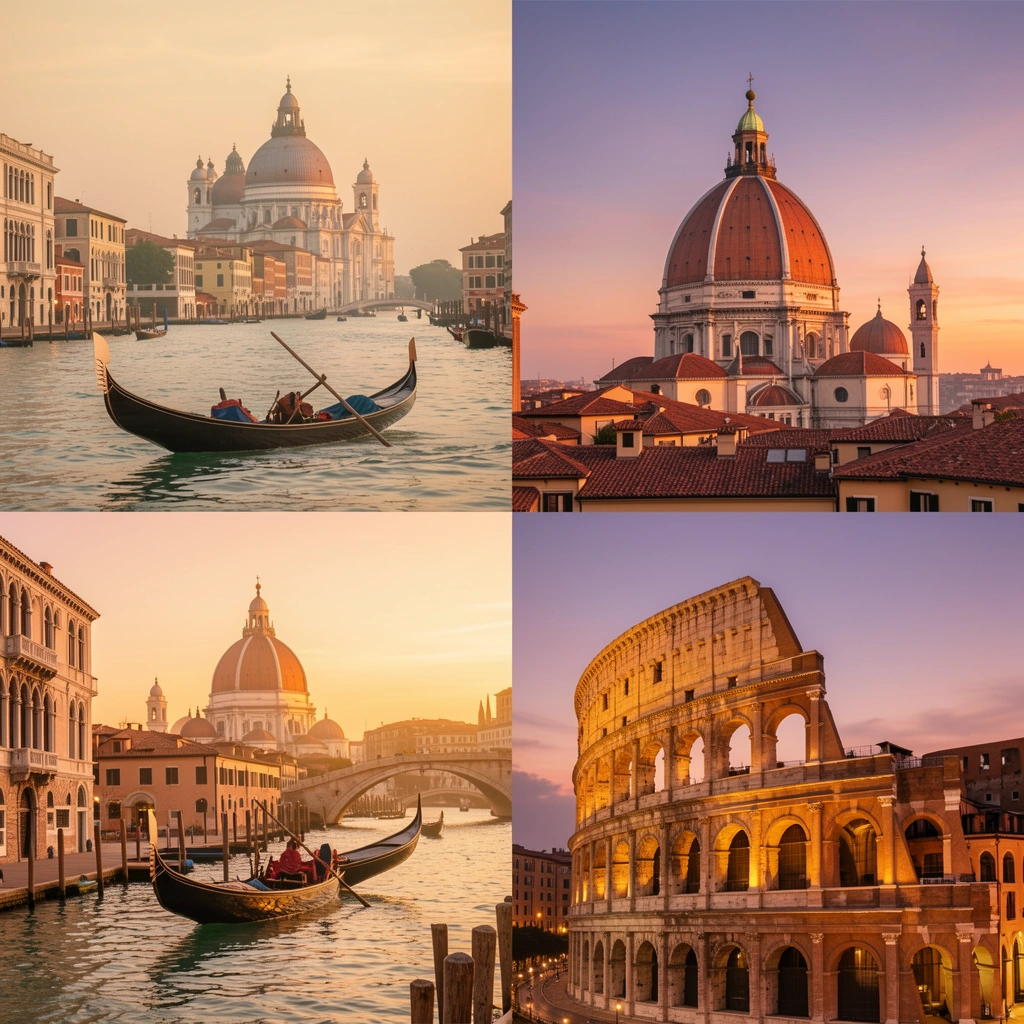
Get lost deliberately. The value of Venice is in the quiet back lanes rather than St Mark’s Square, which is crowded from mid-morning onwards. Go to the square early or late, and spend the middle of the day anywhere else. A gondola is expensive and worth doing once.
Florence
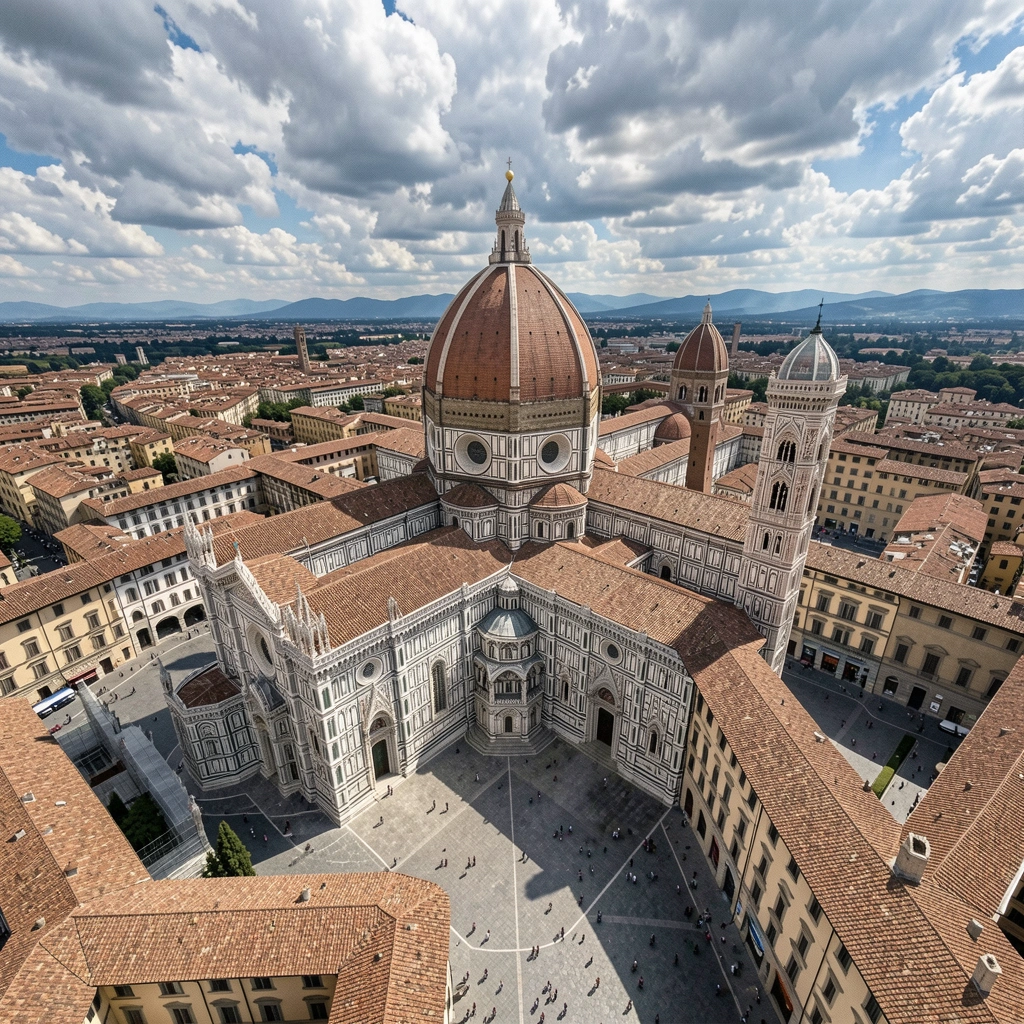
The Uffizi and the Accademia hold the art everyone comes for — Botticelli in one, Michelangelo’s David in the other. Both need pre-booked timed entry. The city itself is small enough to cross on foot in twenty minutes.
Rome
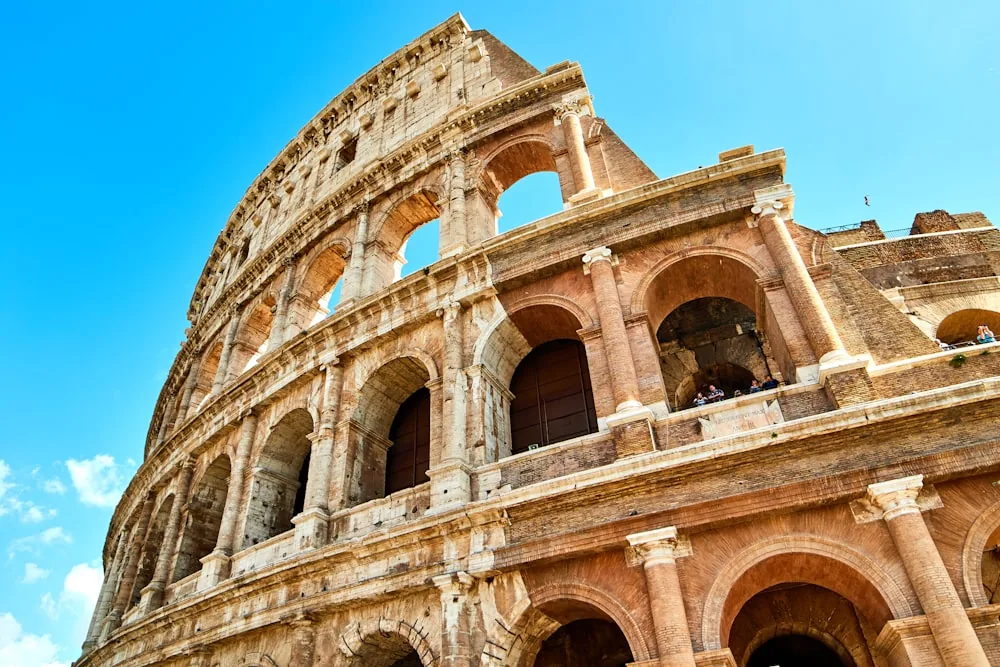
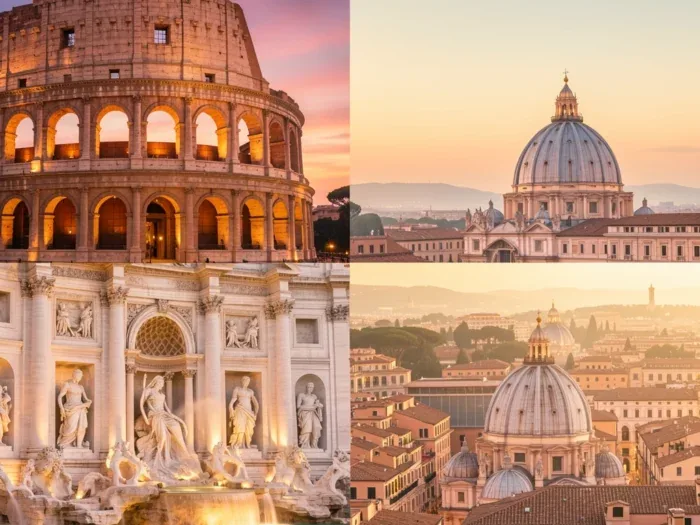
The Colosseum and Roman Forum together, first thing. The Vatican on a separate half-day. Trastevere in the evening. With two nights you are choosing between these rather than doing all of them at leisure, which is the argument for the extra night.
How to handle the two travel days
The two train mornings are where this itinerary either works or feels rushed, and a little planning removes most of the friction.
Book the mid-morning train rather than the first one. It costs you nothing in sightseeing — you would have been having breakfast anyway — and it means you are not carrying luggage across a city at seven in the morning. Most Italian hotels will hold bags after checkout, so you can arrive in the next city, drop everything, and start the afternoon properly even if the room is not ready.
Italian stations are central, which is the whole advantage over flying. Venice Santa Lucia opens directly onto the Grand Canal. Florence Santa Maria Novella is a ten-minute walk from the Duomo. Rome Termini connects to both metro lines. In every case you step off the train and are essentially there.
Validate nothing if you have a high-speed ticket with a seat reservation — that is for regional trains only, and the old advice about stamping tickets no longer applies to Frecciarossa or Italo.
Eating across three cities
Italian regional cooking changes more between these three cities than most visitors expect, and ordering the same thing everywhere wastes the trip.
Venice is seafood and rice — cicchetti, the small bar snacks eaten standing up, are the local habit and much better value than a sit-down meal in a tourist area. Florence is meat, beans and bread: the bistecca alla fiorentina is the famous one, and it is sold by weight for two people. Rome is pasta and offal, with cacio e pepe, carbonara and amatriciana the dishes to judge a kitchen by.
The rule that holds in all three is the same: walk three streets away from whatever monument you have just visited before you eat.
When is the best time to go?
April, May, late September and October. All three cities are hot and very crowded in July and August, and Venice in particular becomes unpleasant at peak — the crowds concentrate in a small space.
Winter is the cheapest and it suits this itinerary better than most. Venice in January, with mist on the canals and no queues, is a different and better city. Bring proper clothes and accept some rain.
Who this holiday suits
First-time visitors to Italy. Good fit — this is the classic introduction and the rail line makes it painless.
Couples with a week to spend. Good fit — six nights is enough to see all three without it feeling like a route march.
Art and history enthusiasts. Good fit — few itineraries anywhere pack in this much. Consideration: pre-book everything.
Confident independent travellers. Good fit — you will handle two hotel changes and two train journeys yourself.
Who might prefer something else
If you dislike moving hotels, six nights in Rome alone will suit you better and you will see more of one city.
If you are travelling with young children, two hotel changes plus queueing at major museums is demanding. A single base with day trips works better.
Want to relax? This is a sightseeing holiday. There is no beach and very little sitting still.
If mobility is a concern, Venice involves many bridges with steps and no road transport at all, and Rome’s cobbles are uneven.
Ways to upgrade
All quoted at enquiry against your dates.
- A seventh night, usually added in Rome
- Higher room categories, or a hotel in central Venice rather than Mestre
- First class on the high-speed rail legs
- Private transfers, including the water taxi into Venice
- Pre-booked skip-the-line entry for the Uffizi, Accademia, Colosseum and Vatican
- Adding Milan, Naples or the Amalfi Coast to the route
- Worth comparing against our 6 Nights Milan, Lake Como & Venice Holiday (2+2+2), which covers similar ground.
Getting there and getting between
London to Italy is around two to two and a half hours depending on the city. We book the flights to fit the route, usually flying into one end and home from the other so you are not backtracking.
Between the cities you travel by high-speed rail, which is faster than flying once airport time is counted, and drops you in the centre of each city rather than on its outskirts. Train connections are included.
Entry requirements for UK travellers
No visa is needed — Italy is in the Schengen area and British passport holders can stay up to 90 days in any 180-day period.
Your passport must be issued within the last ten years of your arrival date and valid at least three months after you leave. Check the issue date, not only the expiry.
The EU’s Entry/Exit System is now rolling out — biometric registration replaces passport stamping on first entry, free, with the record valid three years. Allow extra time at the border initially. Always check the latest official entry requirements on GOV.UK before travelling.
Booking and protection
ATOL protected under licence 10713 and held with a £99pp deposit, arranged end to end by one UK consultant.
For longer, our 12-night Ultimate Italy Tour adds Milan and more time in each city. For a shorter trip see our Rome city break, or browse other multi-centre holidays.


 Save 22%
ATOL Protected
Rome
Bed & Breakfast