What does a Budapest city break include, and what does it cost?
Three nights in a 4★ hotel with return flights from London and ATOL protection under licence 10713, held with a £99 per person deposit. The specific property and the board arrangement are confirmed in writing at enquiry rather than listed here. Regional UK airports are available at a supplement. Thermal bath entry, attraction tickets, transfers and travel insurance are not included. Budapest is the least crowded of the great central European capitals and the one where your money goes furthest. What you pay depends on your travel dates, how many nights you want and which UK airport you fly from.
Budapest, Prague or Vienna?
These three get weighed against each other constantly, and they are genuinely different trips.
Prague is cheaper to book and much busier. Vienna is grander and dearer to spend time in. Budapest sits between them and has the one thing neither has — an afternoon in a thermal bath, which is worth building a trip around.
What you will actually do
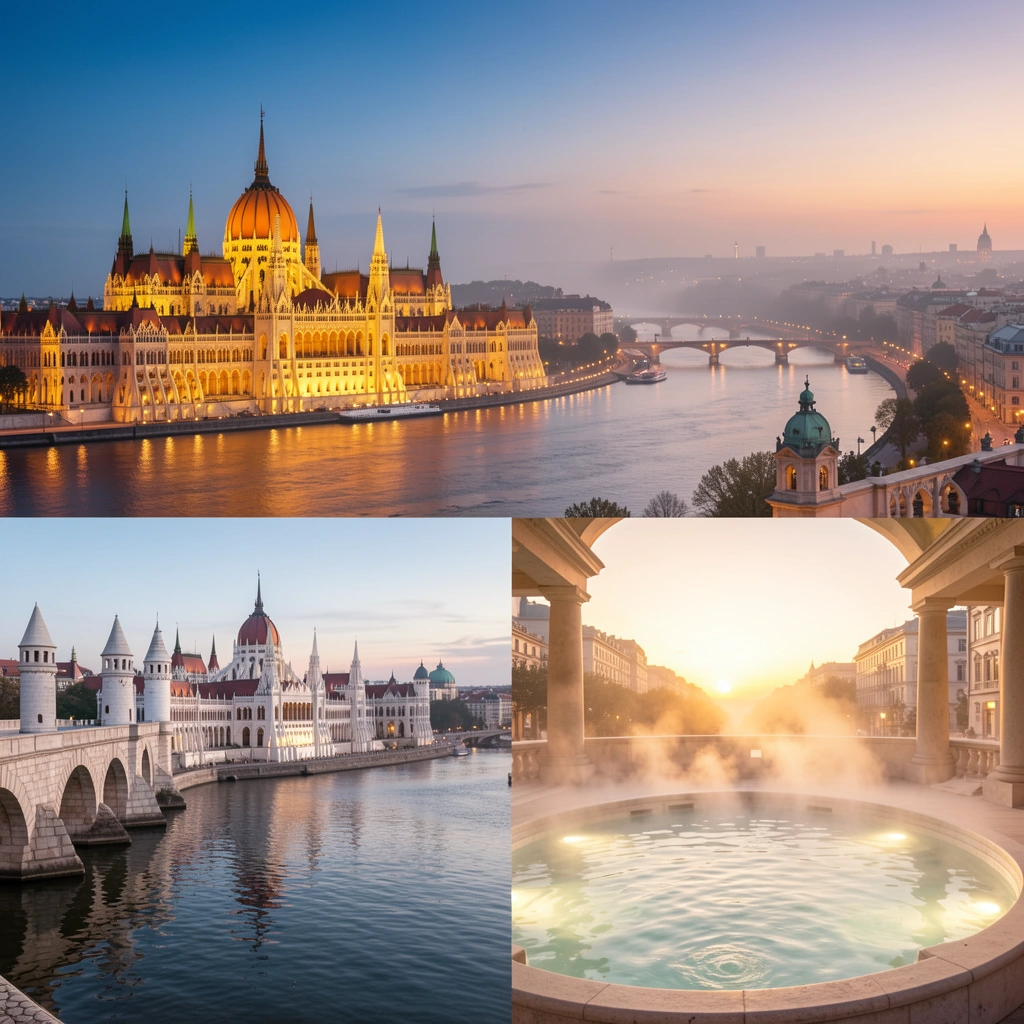
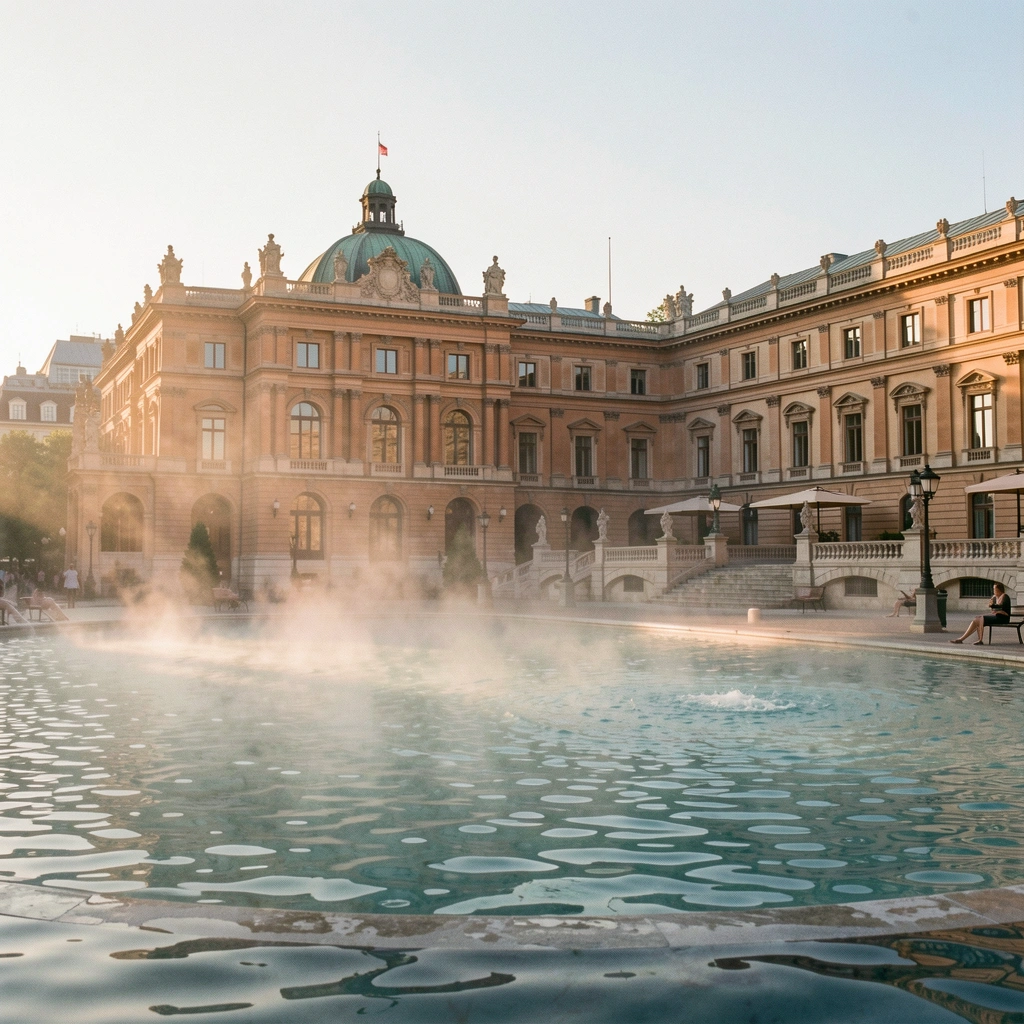
The thermal baths are the reason to come here rather than anywhere else. Széchenyi is the big one — a vast neo-baroque complex with outdoor pools that steam in winter, which is when it is at its best. Bring a towel and flip-flops or pay to hire them. Allow three or four hours; it is an afternoon, not a stop.
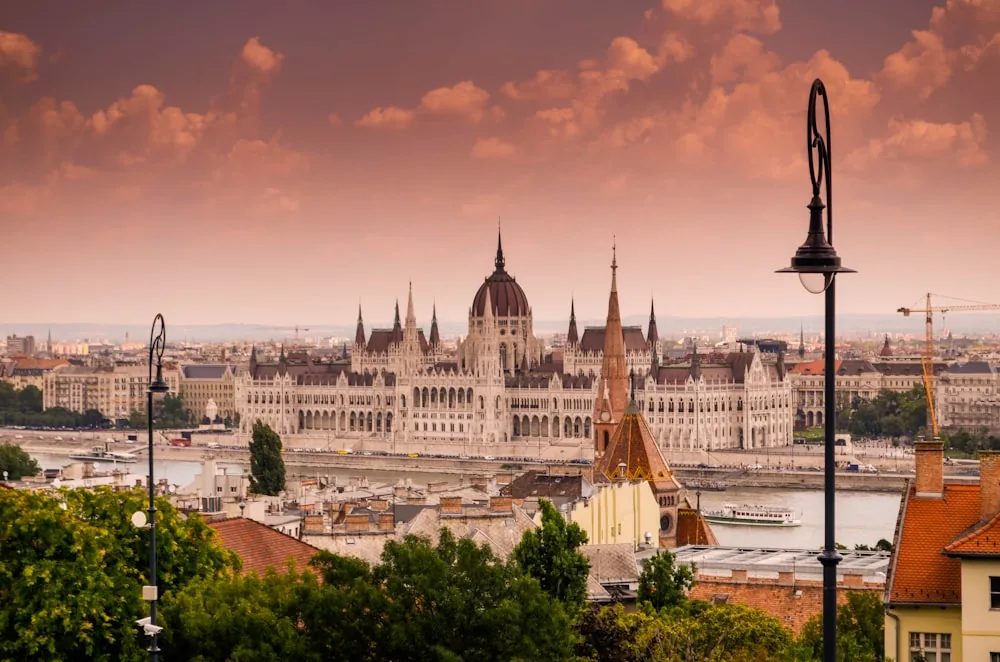
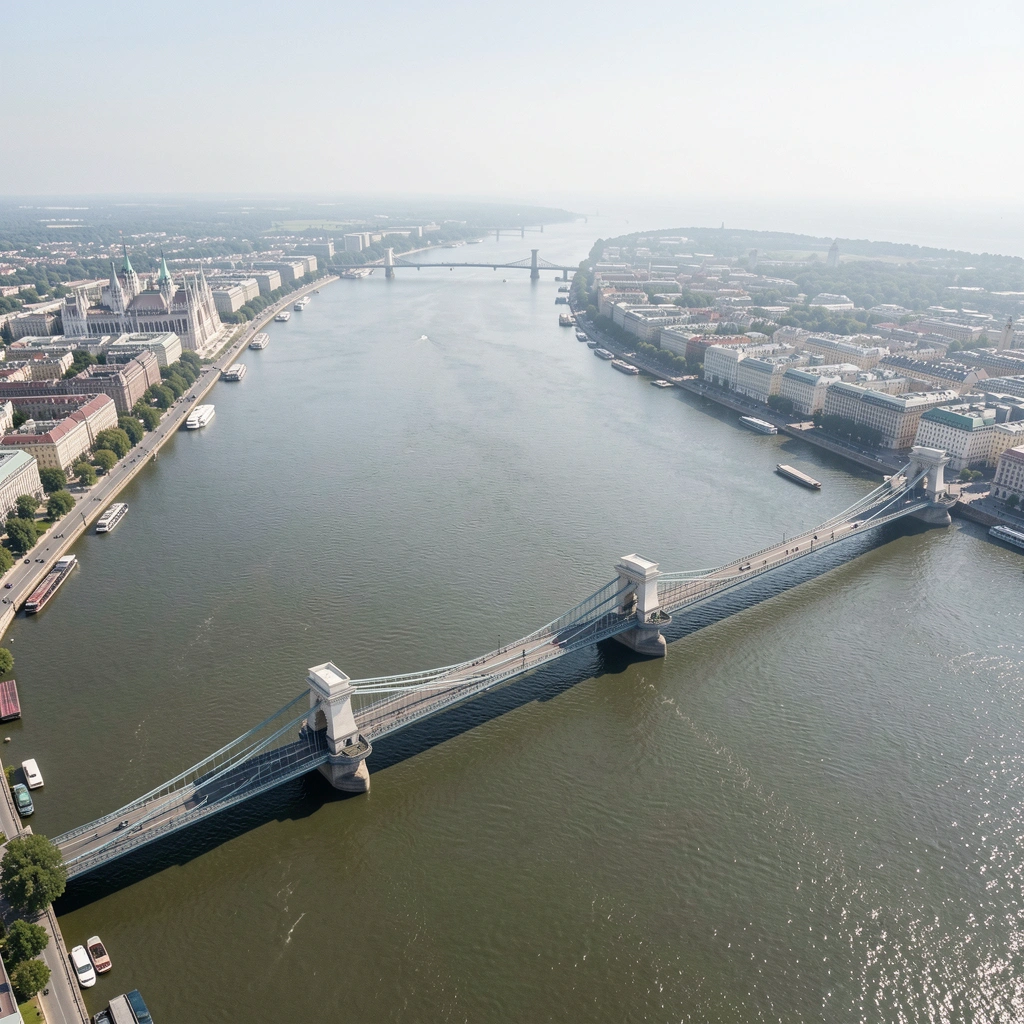
Buda Castle and the Castle District sit on the hill on the west bank, reached by the funicular or on foot. The Fisherman’s Bastion beside it gives the view back over the Danube to the Parliament building, which is the photograph everyone takes and deservedly so.
The Parliament building is the finest thing in the city from the outside and can be toured inside on a timed ticket. Seeing it lit from the Buda side after dark is free and arguably better.
The ruin bars in the Jewish Quarter — abandoned buildings filled with mismatched furniture and lights — are a genuine Budapest invention rather than a tourist construct, though the famous ones are now busy. Szimpla Kert is the original.
When is the best time to go?
January is the cheapest month, and winter is when the thermal baths make most sense. Sitting in a 38°C outdoor pool with snow on the ground is the Budapest experience, and it is not available in August.
July is the most expensive and the baths are considerably less appealing when it is already thirty degrees outside. November is the value pick.
What changes your price?
- The month. January at its cheapest against July at its dearest for the same three nights.
- Departure airport. Priced from London, with regional UK airports at a supplement confirmed at enquiry.
- Hotel and side of the river. The package is a 4★ confirmed at enquiry. Pest is where most of the eating and nightlife is; Buda is quieter and hillier.
- Nights. A fourth night, or Vienna added by train, is priced on request.
- Bath and attraction entry, none of which is included.
Who this holiday suits
- Anyone who likes the idea of spending an afternoon in a thermal bath and calling it sightseeing.
- Travellers who found Prague too crowded and want the same era of architecture with room to move.
- People whose budget matters once they arrive — Budapest is inexpensive on the ground.
- Couples and groups after a city with genuinely good nightlife as well as daytime sights.
- Winter travellers, because this is a city that is better in the cold.
Who might prefer something else
- Want everything walkable? Budapest is large and split by a river. You will use the metro. Prague or Vienna are more compact.
- For a named hotel, we confirm the property in writing before you pay — tell us what you want and we will quote it.
- If the baths do not appeal, you are removing the main reason to choose Budapest over its neighbours.
- If July or August are your dates, it is hot, dearest, and the baths lose much of their point.
- If you expect to pay in euros, Hungary uses the forint and the exchange booths near the tourist sites are not where to change money.
- Want to see the alternatives? Our full range of city breaks is worth a look before you decide.
- If this is nearly right, look at our Milan City Break – 3 Nights Italy too before you decide.
Ways to upgrade
All quoted at enquiry against your dates.
- A named hotel, or one on the Pest side near the river
- A larger room or a Danube view
- A fourth night, or Vienna added as a second city by train
- Széchenyi or Gellért bath entry with a cabin rather than a locker
- Parliament building tour tickets booked in advance
- Airport transfers rather than the shuttle bus
Which thermal bath should you choose?
There are more than a dozen and they are genuinely different. Picking the wrong one is the most common way visitors come away underwhelmed by the thing they came for.
Széchenyi is the big one — a vast neo-baroque complex in the city park with outdoor pools that steam in winter. It is the photograph, it is the busiest, and it is the right choice if you are only going once. Weekday mornings are considerably calmer than weekend afternoons.
Gellért is the beautiful one — art nouveau tiling, stained glass, a sense of being somewhere rather than in a leisure centre. Smaller, more ornate, and the better choice if the architecture matters as much as the water.
Rudas is the old one, Ottoman in origin, with a rooftop pool looking over the Danube. It runs some single-sex sessions, so check the timetable before you set out rather than after.
Entry is not included in the package at any of them. A cabin costs slightly more than a locker and is worth it, and bringing your own towel and flip-flops saves a hire fee at the door.
Getting there and getting around
Flights are from London, around two and a half hours, with regional UK airports at a supplement confirmed at enquiry. Hungary is one hour ahead of the UK.
Transfers are not included. The 100E airport bus runs to the centre for a modest fixed fare and takes around forty minutes. In the city the metro is cheap, fast and includes Line 1, which is the oldest underground railway in continental Europe and a small attraction in itself. Buy a travel card rather than single tickets — inspections are common and fines are not.
Budapest is bigger than Prague or Vienna and split by the Danube, so unlike those two you will not walk everywhere. The Castle District is a hill; the funicular exists for a reason.
Entry requirements for UK travellers
Checked against GOV.UK foreign travel advice on 17 September 2026.
Hungary is in the Schengen area, so British passport holders need no visa for stays of up to 90 days in any 180-day period. Your passport must have been issued within the last 10 years of your arrival date and be valid at least three months after you leave. A passport renewed early before October 2018 may carry months that no longer count.
The EU’s biometric Entry/Exit System is rolling out, replacing passport stamps with fingerprints and a photograph on your first crossing. It is free, lasts three years and makes later trips quicker. ETIAS is not currently required.
Practicalities worth knowing
Hungary does not use the euro. The currency is the forint, and the exchange booths clustered around the tourist sites offer rates that are not what they appear. Use a bank cash machine or pay by card, which works almost everywhere.
At the baths, bring a towel and flip-flops or expect to hire them. A cabin costs a little more than a locker and is worth it. Some baths have separate men’s and women’s days at certain times — check before you go.
Buy a metro travel card rather than single tickets. Inspections are frequent, particularly at interchange stations, and the fines are real.
Restaurants on the main tourist streets of the Jewish Quarter and around Váci utca are priced accordingly. Two streets back, the same meal costs noticeably less, which in a city this cheap is saying something.
Hungarian food is heavier and better than its reputation — goulash is a soup here rather than a stew, and lángos, a fried dough disc with sour cream and cheese, is the street food worth queueing for. Both are markedly more appealing in January than in July.
One more: the Danube splits the city and the bridges are long. Check which side your hotel is on before assuming you will walk back from dinner, because Buda to Pest on foot at midnight is further than it looks on a map.
Booking and protection
This trip is covered by our ATOL licence 10713 and we hold IATA accreditation 91285611. It is held with a deposit of £99 per person, with the balance due before travel.
Prices are per person, based on two people sharing. January and November are the cheapest months and the two when the thermal baths are at their best — which makes the recommendation on this city unusually easy.

 Save 21%
ATOL Protected
Gran Canaria
Room Only