What does a Gran Canaria holiday include, and what does it cost?
Five nights at the Hotel Riu Gran Canaria or similar 4★ with return flights from London and daily breakfast listed in the package. ATOL protection under licence 10713 applies and a £99 per person deposit holds it. Regional UK airports are available at a supplement confirmed at enquiry. Excursions, car hire, transfers and travel insurance are not included, and your meal arrangement is confirmed in writing before you pay. Gran Canaria has the longest reliable season of the three Canary islands we sell.
Which Canary island should you choose?
We sell all three at five nights and 4★, and the prices are far enough apart to be the deciding factor for most people.
Lanzarote is much the cheapest and much the quietest. Tenerife has Teide and the widest range of things to do. Gran Canaria is the one for a straightforward big-resort holiday with the most dependable weather and the liveliest evenings — and it is the most expensive of the three here.
When is the best time to go?
November is the cheapest month, and it is among the best. Gran Canaria’s south is warm and dry through the UK winter, which is the entire point of the island, and November is when it costs least.
August is the dearest on school-holiday demand rather than better weather — the south is reliably warm every month of the year.
The November price against August is the largest lever on the holiday, and November also buys you a quieter island.
What you will actually do
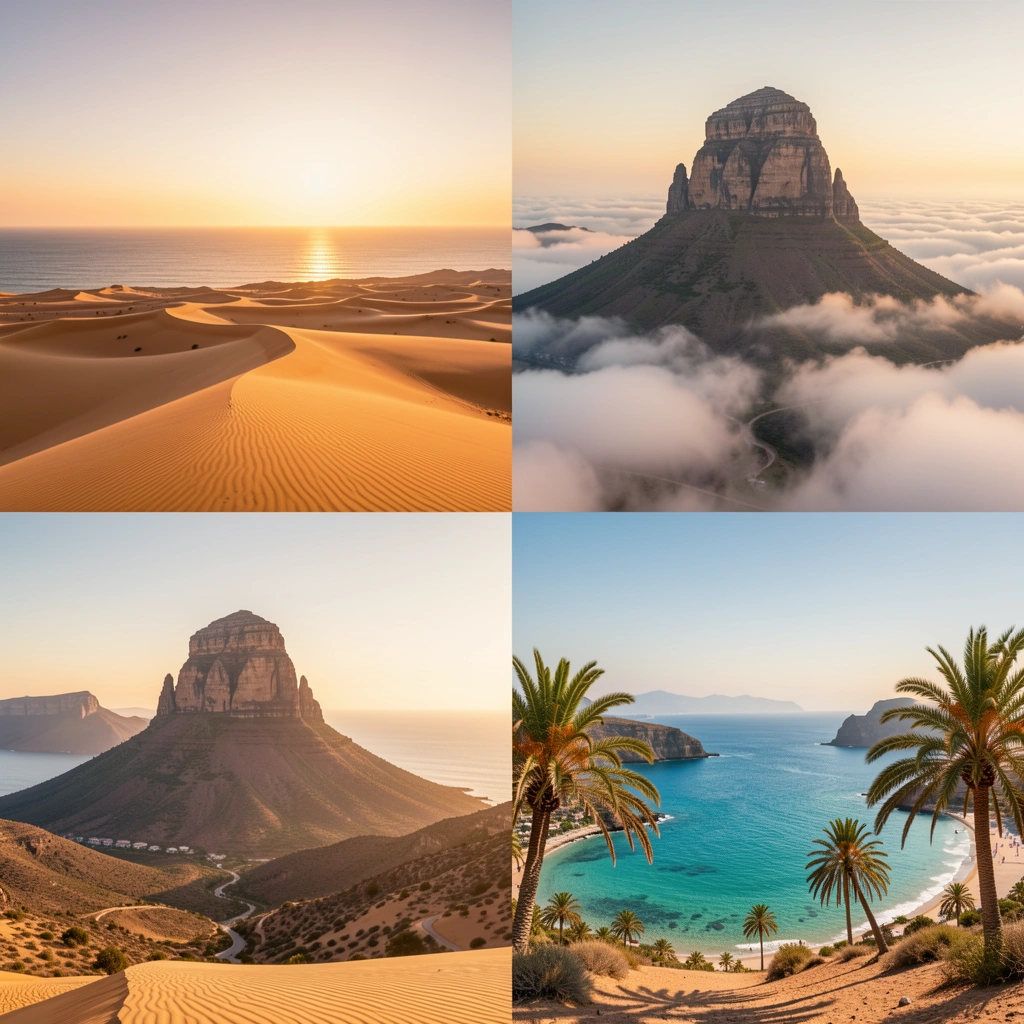
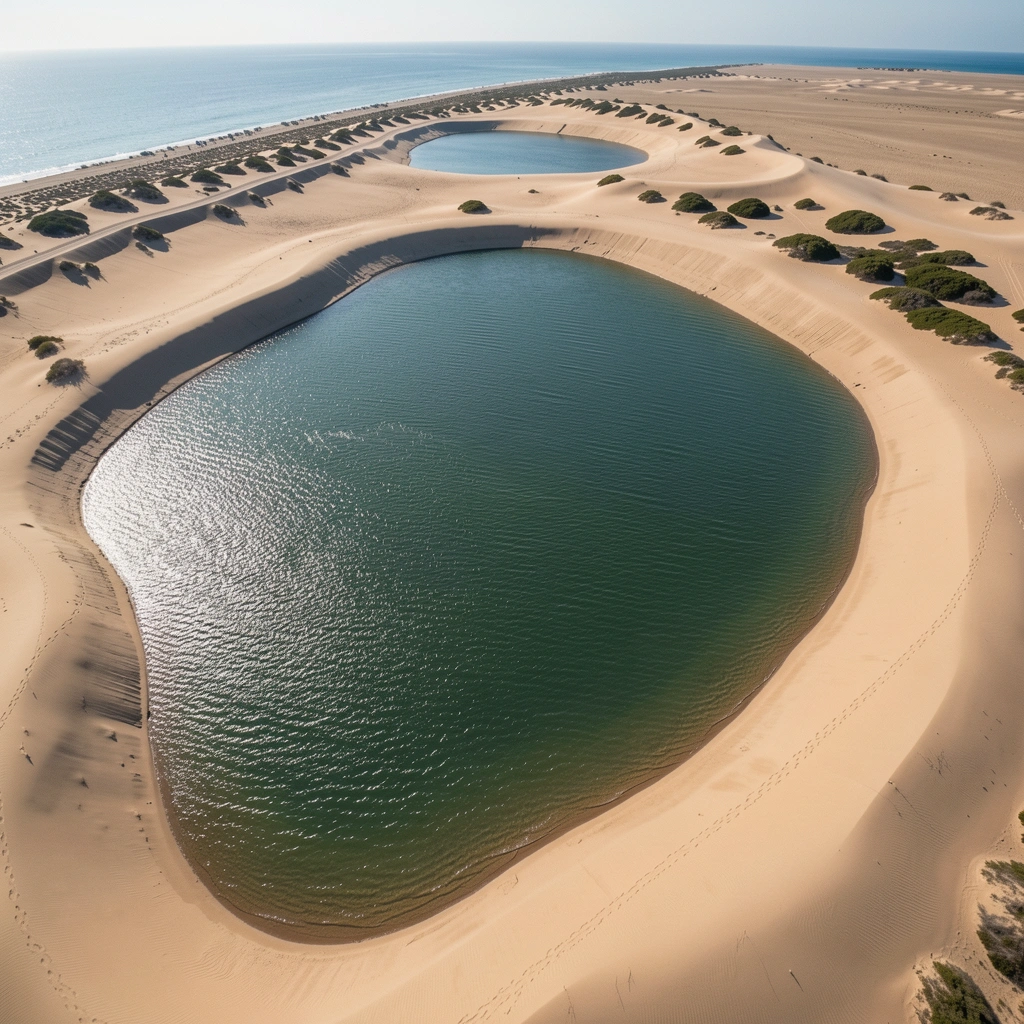
The Maspalomas dunes are the island’s set piece — a protected expanse of sand behind the beach that genuinely resembles a small desert, complete with a lighthouse at one end. Walking across them at either end of the day is free and is the thing most people remember.
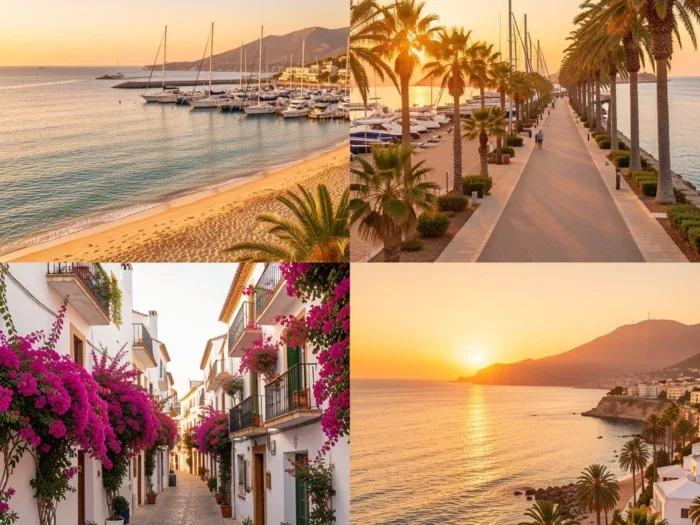
Puerto de Mogán, along the coast to the west, is the prettiest place on the island — a small harbour of white houses and bougainvillea, sometimes called Little Venice for its canals. It is a half day and it is worth the drive or the boat trip along the coast.
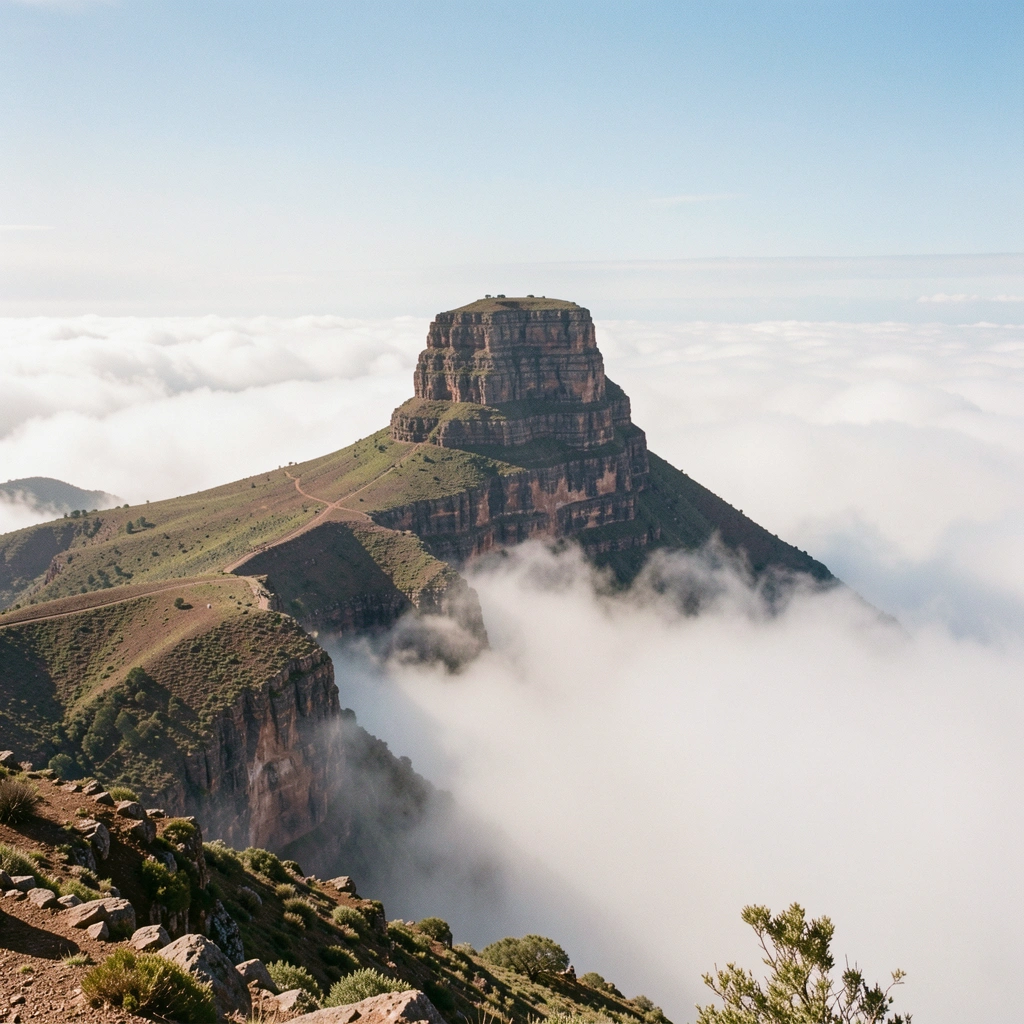
The interior is the surprise. Gran Canaria is often described as a continent in miniature, and the mountain roads up to Roque Nublo and the pine forests around Tejeda are a different world from the resort strip. If you hire a car for a day, take it inland.
Las Palmas, the capital in the north, has a proper old town at Vegueta and a city beach at Las Canteras that locals actually use. It is an hour from the south and a useful contrast if the resort starts to feel narrow.
Gran Canaria is really two islands in one. The south around Maspalomas is dry, sunny and built for beach holidays. The north around Las Palmas is greener, wetter and far more Spanish, and the mountain interior between them is genuinely dramatic.
That matters for weather. Cloud sits over the north and the peaks while the south stays clear, so a grey morning at your hotel does not mean a grey island — a drive over the middle usually finds sun somewhere.
What changes your price?
- The month. November at its cheapest against August at its dearest for the same five nights.
- Departure airport. Priced from London, with regional UK airports at a supplement confirmed at enquiry.
- Hotel and room grade. The Riu Gran Canaria or similar is 4★; sea-view and upgraded categories, and resorts elsewhere on the island, are quoted individually.
- Nights. A week rather than five nights is priced on request.
- Board. All-inclusive is widely available in this part of the island and is priced on request.
Who this holiday suits
- Anyone who wants a straightforward big-resort holiday with dependable weather.
- Winter-sun travellers — this is the most reliable of the three islands from November to March.
- Couples and groups who want evenings out as well as days by the pool.
- Families who want a resort with everything on site and a beach a short walk away.
- Travellers who would hire a car for one day to see the interior.
Who might prefer something else
- If the budget is the constraint, Lanzarote per person is roughly half the price for the same five nights.
- For quiet, the south of Gran Canaria is the busiest and most developed part of any Canary island we sell.
- For one extraordinary day out, Tenerife’s Mount Teide has no equivalent here.
- If August is fixed, you are paying the top price for school-holiday demand rather than better weather.
- Want a quiet boutique hotel? This resort strip is built around larger properties — tell us and we will look elsewhere on the island.
- Still weighing it up? Compare this against every one of our beach holidays.
- Worth comparing against our 5 Nights Lanzarote Escape, which covers similar ground.
Ways to upgrade
All quoted at enquiry against your dates.
- A sea-view or upgraded room at the Riu Gran Canaria
- All-inclusive rather than the standard board
- A different resort — Puerto de Mogán for quiet, Meloneras for a smarter strip
- Seven nights rather than five
- Car hire for the interior and Las Palmas
- Airport transfers rather than a taxi from Las Palmas airport
What is not included?
- Transfers from Las Palmas airport, around thirty minutes to the southern resorts.
- Car hire, fuel and parking.
- Excursions — boat trips to Puerto de Mogán, the interior, and anything from the resort.
- Meals beyond the board arrangement, which we confirm in writing before you pay.
- Travel insurance, and any local charge the hotel collects.
Getting there and getting around
Flights are from London, around four and a half hours, with regional UK airports at a supplement confirmed at enquiry. The Canaries are on GMT — the same as the UK in winter and an hour behind during British Summer Time, so no jet lag either way.
Transfers are not included. Las Palmas airport sits roughly halfway between the capital and the southern resorts, around thirty minutes from Maspalomas by taxi. On the island, the bus service along the south coast and up to Las Palmas is good and inexpensive; a hire car is what you need for the interior.
Entry requirements for UK travellers
Checked against GOV.UK foreign travel advice on 17 September 2026.
The Canary Islands are part of Spain and therefore in the Schengen area. British passport holders need no visa for stays of up to 90 days in any 180-day period. Your passport must have been issued within the last 10 years of your arrival date and be valid at least three months after you leave.
The EU’s biometric Entry/Exit System is rolling out, replacing passport stamps with fingerprints and a photograph on your first crossing. It is free, lasts three years and speeds up later trips. ETIAS is not currently required.
Practicalities worth knowing
The Canaries sit outside the EU VAT area, so alcohol, tobacco and perfume cost less than on the Spanish mainland and duty-free allowances apply on the way home.
The south of the island is dry and sunny; the north around Las Palmas is greener and catches more cloud. They frequently differ on the same day, so a grey morning in the capital is not what the resorts are doing.
The Maspalomas dunes are a protected nature reserve. There are marked routes across them and straying off is both discouraged and, in the middle of the day, hotter than it looks from the promenade.
The sea here is Atlantic and cooler than the Mediterranean year-round, with a noticeable swell on some beaches. Hotel pools are usually heated.
The resort strip runs on a calima occasionally — a hot, dusty wind off the Sahara that turns the sky yellow for a day or two, usually in late winter. It is not dangerous, but it is hazy rather than sunny while it lasts, and it is the one weather event that can interrupt an otherwise dependable forecast.
Buses along the south coast are frequent, cheap and run late, which makes eating out away from your hotel straightforward without a car or a taxi. A multi-day card is better value than singles if you intend to use them more than a couple of times.
Booking and protection
Your booking is covered by our ATOL licence 10713 and we hold IATA accreditation 91285611. It is held with a deposit of £99 per person, with the balance due before travel.
Prices are per person, based on two people sharing. November and January are the two months where the price and the weather both work in your favour.

 Save 22%
ATOL Protected
Lanzarote
Room Only